Dufour Yachts Cruising Sailboats
Dufour 30 Classic Specs and Starter Boat Buying Guide
A tiller-steered, J&J-designed 30-footer that sails like a big dinghy and was Dufour's last boat this small for more than twenty years.
- Length
- 30.7 ft9.35 m
- Beam
- 9.8 ft2.98 m
- Draft
- 5.1 ft1.55 m
- Cabins
- 2
- Used price
- $22K to $42K
On this page
- Overview
- The last Dufour thirty for a generation
- A Slovenian design with French manners
- Which numbers to trust
- Sails like a big dinghy
- On deck and in the cockpit
- Open plan below
- Engine and access
- Starter boat checklist
- Specifications
- Price and value
- Strengths and weaknesses
- Used buyer checklist
- Rivals
- Our verdict
- FAQ
The Dufour 30 Classic is a 9.35 m masthead sloop from 1998 with a cast iron bulb keel, two cabins, a small Volvo saildrive and an open-plan interior. A popular first cruiser in Europe, it now sells cheaply.
- First-time owners
- Couples and young families on a small budget
- Coastal day sailing and weekend cruising
- Sailors who prefer a tiller
The last Dufour thirty for a generation
Dufour built its name on a 30-footer, the Arpège of 1966. Thirty years later the dufour 30 classic was the yard's entry-level cruiser, part of the Classic range that ran from 30 to 50 feet. Practical Boat Owner's Peter Poland noted that this 1998 J&J design was the last 30-footer Dufour launched before the much later Felci-designed Dufour 32. In between, the range grew steadily larger, as it did at every big production builder.
Yachting Monthly tested the boat at the end of 1997 and its writers kept coming back to it. In 2021 Duncan Kent described it as particularly popular with people starting out in sailing, often with young families: pretty, almost traditional in a fiberglass way, and conservatively designed. Dufour still listed it on its website in 2003.
Dufour 30 Classic by the numbers
- Sail area to displacement
- 17.6Balanced power for coastal and offshore cruising.
- Displacement to length
- 196Light displacement for its length, quick but sensitive to added cruising weight.
- Theoretical hull speed
- 6.9 knThe practical top speed of a displacement monohull under normal sailing, based on waterline length.
- Ballast ratio
- 29%Relatively low ballast, form stability does more of the work.
- Capsize screening
- 1.95Below 2.0, the traditional threshold for offshore suitability.
- Motion comfort ratio
- 21.5A quicker motion in waves, typical of light, beamy hulls.
- Length to beam ratio
- 3.14 : 1Moderate proportions.
A Slovenian design with French manners
The design came from J&J Design, the Slovenian studio that also drew the 32 and 35 Classic. Kent pointed out that, for all the boat's conservative looks, J&J were no slouches when it came to fast hulls and modern rigs. The profile has a fairly plumb stem, a pronounced scoop in the transom, a sweeping sheer and a low, sleek coachroof that still looks good.
Below the water is a wide, shallow body with a hard turn of the bilge for form stability, a cast iron bulbed fin keel and a deep balanced spade rudder that keeps its grip when heeled. Dufour offered a shoal keel, and Yachting Monthly says a lifting keel with twin rudders was also available.
Which numbers to trust
Published specs for this boat disagree, and it helps to know why. Dufour's own French product page, archived in 2001 and 2003, gives an overall length of 9.35 m with a 9.04 m hull, a 2.98 m beam, 41 m2 of sail, 3,640 kg displacement with 1,064 kg of ballast, and drafts of 1.20 m and 1.55 m. Yachting Monthly and sailboatdata list a 9.01 to 9.14 m length, 3,100 kg displacement and about 1.15 m of draft.
Nobody has published a reconciliation. The gap may reflect different keel versions or different ways of measuring displacement, so when you look at a specific boat, check the keel type in person and use the factory figures as the reference for the standard fin keel.
- Water 180 L (48 gal), fuel 75 L (20 gal)
- Two cabins, four to six berths
- Engine listed as 10 to 20 hp in 2001 and 19 hp in 2003
Sails like a big dinghy
Every review agrees on how the 30 Classic sails. Yachting Monthly's 2009 summary called it quick under full canvas, easy to handle, close-winded and fairly well balanced. Kent went further: light but instantly responsive on the helm, quick to accelerate after a tack and fast upwind and down, damned good fun and exactly what you want from a coastal cruiser.
The rig is a simple masthead sloop on a deck-stepped Z-Spar mast with single lower shrouds set on the toerail, giving a wide shroud base. Headsail tracks on the coachroof allow tight sheeting and good pointing. The single-point mainsheet sits within reach of the tiller, though Kent would add a short track, an easy job. The older Yachting Monthly verdict also warned that the rig was rather lightly built for serious offshore work, so treat this as a coastal boat.
On deck and in the cockpit
The cockpit is laid out for short-handed sailing, with the essentials close to the helm. Genoa winches are on the coachroof, a stretch for a solo sailor but manageable without letting go of the tiller. One large, deep cockpit locker holds the fuel tank and still swallows an inflatable, fenders and lines. Side decks and foredeck are wide and clear, with a single bow roller and chain locker. The molded non-slip is reasonable, but handholds are few.
Open plan below
Below, J&J chose an open plan that makes the boat feel bigger at the cost of locker space. The furniture is built on a bonded inner molding finished in mahogany-faced plywood. The saloon sits well forward, with long straight settees and a twin-leaf table for six, which leaves room aft for a forward-facing chart table and a galley with a full-size cooker and ice box. The head is aft of the companionway and has good stowage.
Early boats have a V-berth in the forepeak screened only by a curtain; a later option added an infill and a solid bulkhead with a door. The aft cabin is surprisingly roomy with a long berth, but a single opening port makes it dark and a little musty. Headroom is about 1.75 m (5 ft 9 in) in the main areas, a little less in the head and aft cabin.
Engine and access
Power is a small Volvo Penta with a saildrive. Kent's test boat had an 18 hp diesel, which he found had plenty of power for fighting a foul tide. Because the saildrive sits a long way ahead of the rudder, propwash steering in tight marinas takes a moment to bite. Access is excellent, since the companionway steps and engine box lift out completely.
Starter boat checklist
Expect $22,000 to $42,000 for a sound boat in 2026, often less for a project. At this age the survey should focus on the balsa-cored deck around fittings, the hull-to-deck joint, the cast iron keel and its bolts, the saildrive diaphragm and seals, and the rig. The UK Dufour Owners' Association, at dufour.org.uk, is a useful source of advice and parts knowledge.
Dufour 30 Classic specifications
| Length overall | 30.7 ft9.35 m |
|---|---|
| Waterline length | 26.4 ft8.03 m |
| Beam | 9.8 ft2.98 m |
| Draft | 5.1 ft1.55 m |
| Displacement | 8,025 lbs3,64 kg |
| Ballast | 2,346 lbs1,064 kg |
| Sail area | 441 sq ft41 m² |
| Fuel capacity | 2 gal75 L |
| Fresh water | 48 gal18 L |
| Cabins | 2 |
| Berths | 4 to 6 |
| Heads | 1 |
| Standard engines | Volvo Penta diesel with saildrive, about 10 to 19 hp depending on year |
| Maximum power | 20 hp |
| Hull type | Wide, shallow canoe body with a hard turn of the bilge and a deep balanced spade rudder |
| Keel | Cast iron bulb fin, 1.55 m (5 ft 1 in); shoal 1.20 m (3 ft 11 in); lifting keel with twin rudders also offered |
| Rig | Masthead sloop, deck-stepped Z-Spar mast, single lower shrouds, coachroof sheeting tracks |
| Hull construction | Vacuum-bagged solid fiberglass hull, balsa-cored deck bolted and bonded to the hull |
| Builder | Dufour Yachts, France |
| Naval architect | J&J Design |
| Production | 1998 to present |
| Status | Discontinued |
Figures come from builder documentation and independent tests where available. Displacement is usually quoted light, so a loaded cruising boat will weigh more. Compare these specs with another model.
How much does a Dufour 30 Classic cost?
US listings for the Dufour 30 Classic are scarce, so most buyers find boats in France, the UK or the Mediterranean, where they change hands at modest prices. A newer engine, replaced standing rigging and a fresh headsail add more value than any other upgrades. Lifting-keel boats appeal to sailors with drying moorings.
Estimate your yearly cost
A planning estimate using common rules of thumb: insurance near 1.5 percent of value, maintenance near 3 percent, haul out and bottom paint by length. Your marina, region and use will move these numbers. Open the full cost calculator.
Versions and options
- Standard fin keel
- 1.55 m cast iron bulb keel, the best for sailing performance.
- Shoal keel
- 1.20 m draft for shallow harbors.
- Lifting keel with twin rudders
- For drying moorings; worth a specialist check of the lifting gear.
Dufour 30 Classic timeline
- 1966Dufour's first big success, the Arpège 30, is launched
- 1997Yachting Monthly publishes its first test of the 30 Classic
- 1998The J&J-designed Classic 30 enters production
- 2003Still listed on Dufour's website, now with a 19 hp engine
- 2021Yachting Monthly revisits it as a well-balanced used buy
Strengths and weaknesses
What owners like
- Responsive, dinghy-like handling
- Simple tiller steering and masthead rig
- Good pointing thanks to coachroof sheeting
- Open, airy saloon for a 30-footer
- Excellent engine access
- Low purchase price
What to weigh up
- Rig considered light for serious offshore work
- Limited locker space below
- Dark, musty aft cabin
- Few boats in the US
- Headroom of about 5 ft 9 in
Used Dufour 30 Classic buyer checklist
Take this list to a viewing. Your ticks are saved in this browser so you can come back to it.
Always commission an independent marine survey and an engine survey before you buy. How a marine survey works.
Rivals to consider
Beneteau Oceanis 311
A slightly larger French alternative of the same era with more interior volume.
Compare side by sideJeanneau Sun Odyssey 29.2
Close in size and price, with a similar entry-level brief.
Hunter 30
American-built and easier to find in the US, with a roomier interior.
Compare side by sideCatalina 30
The classic US first cruiser with a huge owner community and parts support.
Compare side by sideOur verdict on the Dufour 30 Classic
The Dufour 30 Classic is a small boat with a big personality. It sails crisply, points well and rewards a sailor who likes the feel of a tiller, while still offering two cabins and a proper galley for weekends away. It is a coastal cruiser, not an ocean boat, and the open-plan interior trades stowage for space. Buy on deck condition and engine health rather than year, and it makes an affordable, genuinely enjoyable first cruiser.
Dufour 30 Classic questions answered
Who designed the Dufour 30 Classic?
The Slovenian studio J&J Design, which also drew the Dufour 32 and 35 Classic.
How heavy is the Dufour 30 Classic?
Dufour's factory sheet lists 3,640 kg with 1,064 kg of ballast. Some magazine and database figures give a lighter 3,100 kg.
Does the Dufour 30 Classic have a tiller or wheel?
A tiller, which reviewers praised for its feedback and for freeing cockpit space.
How much is a Dufour 30 Classic worth?
Roughly $22,000 to $42,000 in 2026, with most boats located in Europe.
Is the Dufour 30 Classic suitable for offshore sailing?
It is best treated as a coastal cruiser. Yachting Monthly described the rig as rather lightly built for serious offshore work.
Photos from the Dufour Yachts range
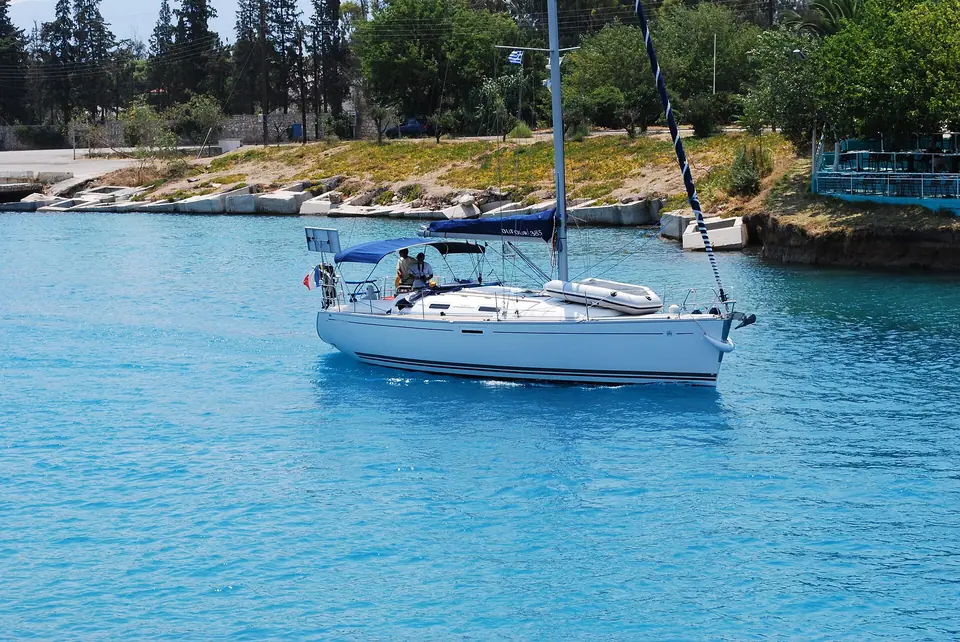
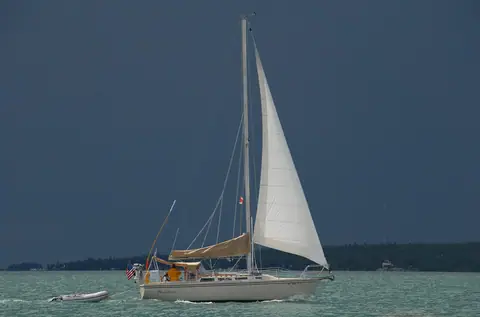
We have not found a freely licensed photo of the Dufour 30 Classic yet, so these show other Dufour Yachts boats, each captioned with the boat pictured.
More cruising sailboats to explore
Hunter 30
Cruising Sailboats, 30 ft
Used $7K to $27K
Bavaria 30 Cruiser
Cruising Sailboats, 31 ft
Used $38K to $62K
Beneteau Oceanis 30.1
Cruising Sailboats, 31 ft
Used $95K to $175K
Catalina 30
Cruising Sailboats, 30 ft
Used $8K to $58K
Other Dufour Yachts models
- Dufour 36 Classic
- Dufour 40 Performance
- Dufour 50 Classic
- Dufour 56 Exclusive
- Dufour 61
- Dufour 360 Grand Large
- Dufour 385 Grand Large
- Dufour 390 Grand Large
- Dufour 405 Grand Large
- Dufour 412 Grand Large
- Dufour 430 Grand Large
- Dufour 455 Grand Large
- Dufour 460 Grand Large
- Dufour 470
- Dufour 520 Grand Large
- Dufour 530
- Dufour 560 Grand Large
- Dufour Catamarans 48
- All Dufour Yachts models