Beneteau Oceanis 510, an Early 1990s 50 Footer Explained
A long waterline, a wing keel and 264 gallons of water made the Oceanis 510 a natural liveaboard, and many have been refitted into very capable cruisers.
- Length
- 50.2 ft15.29 m
- Beam
- 15.6 ft4.75 m
- Draft
- 5.9 ft1.8 m
- Cabins
- Varies by version; private boats commonly have twin aft cabins, a forward cabin and a separate forepeak cabin
- Used price
- $90K to $165K
On this page
- Overview
- What one 1993 Oceanis 510 listing tells you
- Philippe Briand's big Oceanis for 1992
- How close the 510 is to the Oceanis 500
- Twin aft cabins, two heads and a forepeak cabin
- Perkins power and steel tanks under the berths
- Oceanis 510 or Oceanis 51.1
- The refit path that turns a 510 into a modern cruiser
- What a Beneteau 510 for sale costs in the US
- Specifications
- Price and value
- Strengths and weaknesses
- Used buyer checklist
- Rivals
- Our verdict
- FAQ
The Beneteau Oceanis 510 is a 50 ft 2 in Philippe Briand designed masthead sloop first built in 1992. It has a wing keel drawing 5 ft 11 in, an 80 hp Perkins on a shaft, 148 gallons of fuel and 264 gallons of water, and was sold to charter as the Moorings 510.
- Liveaboard couples on a budget
- Owners planning a staged refit
- Mediterranean and Caribbean cruising
- Shallow water cruising grounds
Beneteau Oceanis 510 by the numbers
- Sail area to displacement
- 16.8Balanced power for coastal and offshore cruising.
- Displacement to length
- 156Light displacement for its length, quick but sensitive to added cruising weight.
- Theoretical hull speed
- 8.9 knThe practical top speed of a displacement monohull under normal sailing, based on waterline length.
- Ballast ratio
- 35%A typical ballast ratio for a cruising monohull.
- Capsize screening
- 1.99Below 2.0, the traditional threshold for offshore suitability.
- Motion comfort ratio
- 26.6Moderate motion comfort, typical of modern cruisers.
- Length to beam ratio
- 3.22 : 1Moderate proportions.
What one 1993 Oceanis 510 listing tells you
The best way to understand the Beneteau Oceanis 510 today is to read a good listing. A 1993 example currently advertised in Greece describes itself as a capable bluewater yacht with more than 140,000 euros of documented work since 2009: an anti-osmosis treatment, new standing rigging, a synthetic teak deck, a watermaker, a retractable bow thruster, a motorized in-mast furler, solar panels on a stainless gantry and a Code Zero on a removable bowsprit. It asked 125,000 euros.
That is the 510 story in a paragraph. The original boat is a big, long-waterline Philippe Briand cruiser with generous tanks. Thirty years on, its value depends on whether an owner has invested in the hull, rig and systems. Searches for a 1993 Beneteau Oceanis 510 are common for exactly this reason: buyers want to know what a well refitted example should cost and what a neglected one will need.
Philippe Briand's big Oceanis for 1992
Sailboatdata lists the Oceanis 510 as a Briand design first built in 1992. It measures 50 ft 2 in overall with a 44 ft 7 in waterline, a 15 ft 7 in beam and a wing keel drawing 5 ft 11 in. Displacement is 30,864 lb with 10,803 lb of ballast, and the masthead rig carries about 1,032 sq ft of sail.
The waterline is the key number. At nearly 89 percent of overall length, it gives a theoretical hull speed of about 8.95 knots and a lot of interior volume. The sail area to displacement ratio of about 16.9 is modest, though, so the 510 is a boat that wants a breeze. In light air, owners rely on a large genoa or a Code Zero, which is why so many refitted boats now carry a bowsprit.
How close the 510 is to the Oceanis 500
Put the sailboatdata entries for the Oceanis 500 of 1988 and the Oceanis 510 side by side and they are almost the same boat. Both are Briand designs with a 15 ft 7 in beam, a waterline of about 44 ft 6 in to 44 ft 7 in, roughly 10,800 lb of ballast and the same 148 gallon fuel capacity. The 510 is listed slightly heavier, with less sail area and a slightly shallower wing keel, and with an 80 hp Perkins rather than the 500's 85 hp Perkins 4-236.
The sensible reading is that the 510 was a development of the 500 rather than a completely new hull, though we have not found a builder document confirming it. For buyers, the practical conclusion is simple: compare individual boats on condition and refit history, not on which of the two numbers is on the transom.
Twin aft cabins, two heads and a forepeak cabin
Interiors vary, and charter versions were fitted out differently, so confirm the layout of each boat. The 1993 private boat described above has a central saloon with settee and dining area, a forward cabin, twin aft cabins and two separate heads, plus a forward crew cabin in the forepeak that the owner had converted into a sail locker and workshop. That conversion is common on cruising boats of this size and makes a lot of sense for a couple.
The same listing describes good headroom, natural light from hatches and saloon windows, a practical galley and a proper navigation area. Expect 1990s Beneteau joinery: solid and serviceable, but often needing new upholstery, headliners and varnish.
Perkins power and steel tanks under the berths
Sailboatdata lists an 80 hp Perkins as the original engine. In the 1993 listing the original Perkins was still installed on a conventional shaft, with an hour meter that had been replaced, and the fuel was carried in two steel tanks beneath the aft berths, about 560 liters in total. Steel tanks of that age are a known risk. Ask when they were last inspected, look for rust weeping at the bottom of the tanks and fittings, and budget for replacement if there is any doubt.
Water capacity is about 264 gallons, enough for long stays at anchor, and most cruising owners have added a watermaker. Electrical systems have almost always been rebuilt by now, often with solar, a wind generator and an inverter. Look for neat installations, a proper battery monitor and documented work.
Oceanis 510 or Oceanis 51.1
Do not confuse the 510 with the Oceanis 51.1, a 52 foot Berret-Racoupeau design built from 2017 to 2025 with a modern hull, deck and interior. The two share nothing but the number. Search results for beneteau 510 sometimes mix them, and the price difference is enormous, so check the year and the photos.
Sailboatdata also notes the 510 was sold as the Moorings 510 and as the Stardust 515 for charter fleets. Those boats share the hull but usually have charter interiors.
The refit path that turns a 510 into a modern cruiser
The 1993 listing doubles as a refit checklist for this model. Its owner treated the hull for osmosis, replaced the standing rigging and running rigging, laid a synthetic teak deck, added an inner forestay for a staysail and a flying storm jib, installed a stainless gantry for solar panels and dinghy hoisting, motorized the furling main and added electric winches. That is close to the list any buyer should expect to complete over the first few years of ownership.
None of this is unusual for a 30-year-old boat, but it adds up quickly. A 510 that has had most of it done is worth paying for. One that has not is cheaper to buy and expensive to finish.
- Hull osmosis treatment or a clean moisture survey
- Standing rigging less than 10 years old
- Deck replaced or professionally rebedded
- Fuel tanks inspected or replaced
- Bow thruster and electric winches for short-handed handling
What a Beneteau 510 for sale costs in the US
Very few Oceanis 510s are listed in the US at any time, and many of the best examples are in Europe. Realistic US asking prices in 2026 run from about $90,000 for a boat needing major work to about $165,000 for a well upgraded example. The Greek listing's 125,000 euro asking price, roughly $140,000, is a fair benchmark for a fully sorted 1993 boat.
Annual costs for a 50 footer on the US East Coast, with slip, insurance, haul-out and maintenance, typically run $12,000 to $25,000.
Beneteau Oceanis 510 specifications
| Length overall | 50.2 ft15.29 m |
|---|---|
| Waterline length | 44.6 ft13.59 m |
| Beam | 15.6 ft4.75 m |
| Draft | 5.9 ft1.8 m |
| Displacement | 30,864 lbs14, kg |
| Ballast | 10,803 lbs4,9 kg |
| Sail area | 1,032 sq ft95.9 m² |
| Fuel capacity | 148 gal56 L |
| Fresh water | 264 gal999 L |
| Cabins | Varies by version; private boats commonly have twin aft cabins, a forward cabin and a separate forepeak cabin |
| Heads | 2 on private boats |
| Standard engines | Perkins diesel, 80 hp (80 CV), shaft drive |
| Maximum power | 80 hp |
| Hull type | Moderate displacement monohull with wing keel |
| Keel | Wing keel, 5 ft 11 in draft |
| Rig | Masthead sloop, in-mast furling main common |
| Hull construction | Fiberglass (GRP) |
| Builder | Beneteau, France |
| Naval architect | Philippe Briand |
| Production | 1992 to present |
| Status | Discontinued |
Figures come from builder documentation and independent tests where available. Displacement is usually quoted light, so a loaded cruising boat will weigh more. Compare these specs with another model.
How much does a Beneteau Oceanis 510 cost?
Values for the Oceanis 510 depend almost entirely on refit history. A 1993 boat advertised in Greece with more than 140,000 euros of documented work since 2009 asked 125,000 euros, which is a useful benchmark for a well upgraded example. Boats with original rigging, untreated hulls and the original Perkins sell for much less, and ex-Moorings 510s generally trade below private boats.
Estimate your yearly cost
A planning estimate using common rules of thumb: insurance near 1.5 percent of value, maintenance near 3 percent, haul out and bottom paint by length. Your marina, region and use will move these numbers. Open the full cost calculator.
Versions and options
- Oceanis 510
- The private version; layouts vary but commonly include twin aft cabins, two heads and a forepeak cabin.
- Moorings 510
- Charter version of the same hull for The Moorings fleet.
- Stardust 515
- Charter version for the Stardust fleet.
Beneteau Oceanis 510 timeline
- 1988The Briand designed Oceanis 500, the 510's close relative, is first built
- 1992Oceanis 510 first built
- 1995The Farr designed Beneteau 50 arrives as the next large Beneteau cruiser
- 2017The unrelated Oceanis 51.1 reuses a similar number
Strengths and weaknesses
What owners like
- Long 44 ft 7 in waterline
- Wing keel drawing under 6 ft
- 148 gallons of fuel and about 264 gallons of water
- Conventional shaft drive
- Many boats already refitted
What to weigh up
- Modest sail area for its weight
- Steel fuel tanks on some boats
- Rare in the US
- Layouts vary and documentation is often thin
Used Beneteau Oceanis 510 buyer checklist
Take this list to a viewing. Your ticks are saved in this browser so you can come back to it.
Always commission an independent marine survey and an engine survey before you buy. How a marine survey works.
Rivals to consider
Beneteau Oceanis 500
The near-identical 1988 predecessor, usually a little cheaper.
Compare side by sideBeneteau 50
The Farr designed 50 from 1995, newer, more refined and more expensive.
Compare side by sideJeanneau Sun Odyssey 52.2
A slightly later French 50 footer with a more modern hull and interior.
Our verdict on the Beneteau Oceanis 510
The Oceanis 510 is a classic early 1990s big cruiser: long waterline, shallow wing keel, big tanks and a Perkins on a shaft. It will never be a light air flyer, and every example now needs or has had a substantial refit. But the best ones, with osmosis treated, rigging renewed and modern systems added, are genuinely capable liveaboard yachts for the price of a used 40 footer. Buy on documentation and survey, not on the year on the transom.
Beneteau Oceanis 510 questions answered
Who designed the Beneteau Oceanis 510?
Philippe Briand, according to sailboatdata. It was first built in 1992.
What is a 1993 Beneteau Oceanis 510 worth?
A well refitted 1993 boat was recently advertised at 125,000 euros in Greece. In the US, expect about $90,000 to $165,000 depending on condition.
What engine does the Oceanis 510 have?
The original engine was an 80 hp Perkins diesel on a conventional shaft. Check whether it has been repowered.
Is the Oceanis 510 related to the Oceanis 51.1?
No. The 51.1 is a Berret-Racoupeau design built from 2017 to 2025 and has nothing in common with the 510 except the number.
Is the Oceanis 510 the same as the Oceanis 500?
They are closely related Briand designs with nearly identical dimensions, but the 510 is newer, slightly heavier and has a smaller sail plan.
How much water does the Oceanis 510 carry?
About 264 gallons of water and 148 gallons of fuel.
Photos from the Beneteau range
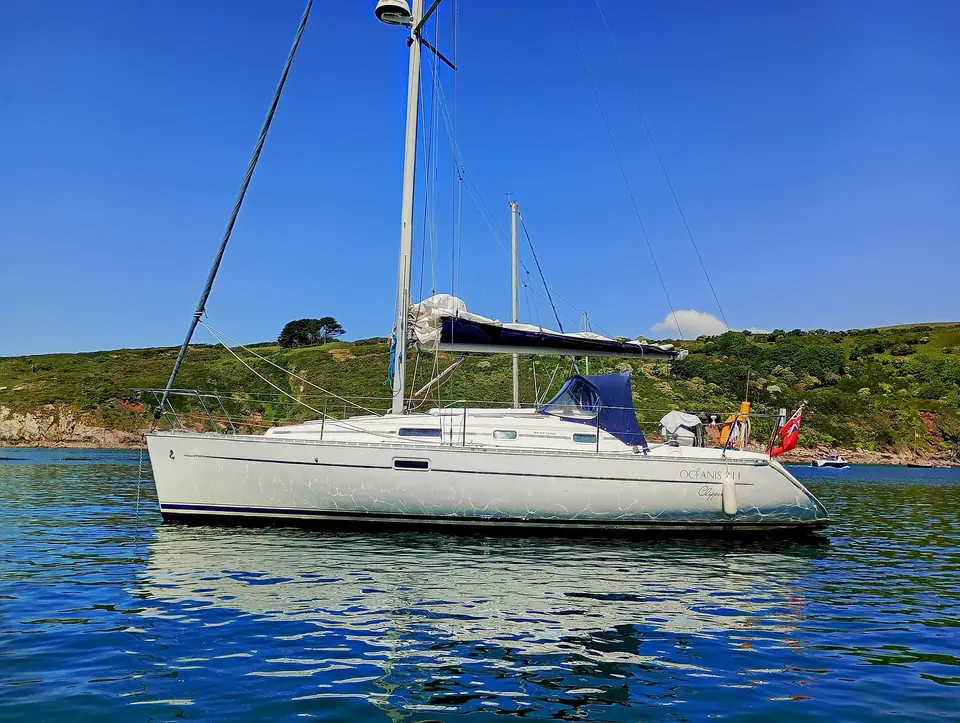
We have not found a freely licensed photo of the Beneteau Oceanis 510 yet, so these show other Beneteau boats, each captioned with the boat pictured.
More cruising sailboats to explore
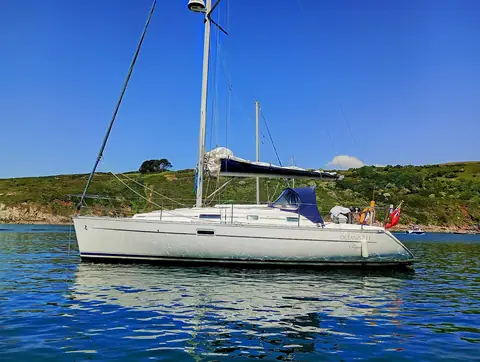
Beneteau Sense 50
Cruising Sailboats, 50 ft
Used $260K to $420K
Beneteau Oceanis 500
Cruising Sailboats, 50 ft
Used $75K to $140K
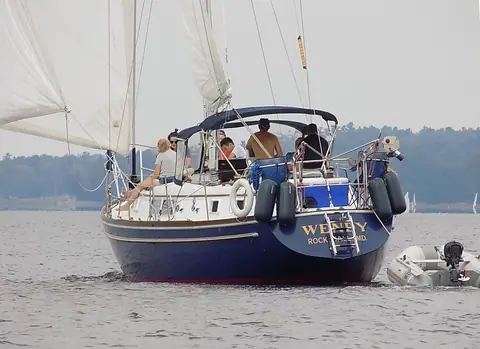
Gulfstar 50
Cruising Sailboats, 50 ft
Used $60K to $170K
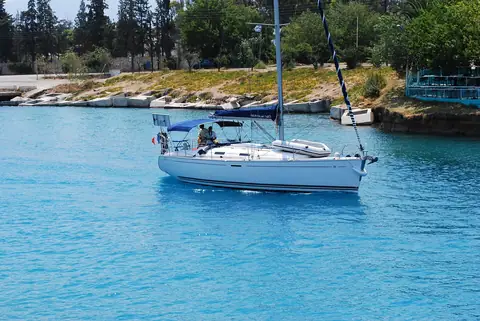
Dufour 50 Classic
Cruising Sailboats, 50 ft
Used $85K to $165K
Other Beneteau models
- Beneteau 49
- Beneteau 50
- Beneteau 57
- Beneteau 343
- Beneteau Antares 5.80
- Beneteau Antares 6
- Beneteau Antares 6.80
- Beneteau Antares 7
- Beneteau Antares 7.30
- Beneteau Antares 7.60
- Beneteau Antares 7.80
- Beneteau Antares 8
- Beneteau Antares 8.00
- Beneteau Antares 8.05
- Beneteau Antares 8.60
- Beneteau Antares 8.80
- Beneteau Antares 9
- Beneteau Antares 9.80
- Beneteau Antares 10.80
- Beneteau Antares 11
- Beneteau Antares 12
- Beneteau Antares 13.80
- Beneteau Antares 30
- Beneteau Antares 32
- Beneteau Antares 36
- Beneteau Antares 42
- Beneteau Antares 620 HB
- Beneteau Antares 650 HB
- Beneteau Antares 750 HB
- Beneteau Cyclades 39.3
- Beneteau Cyclades 43.3 and 43.4
- Beneteau Cyclades 50.5
- Beneteau First 18 SE
- Beneteau First 20
- Beneteau First 21.7
- Beneteau First 24
- Beneteau First 25
- Beneteau First 25.7
- Beneteau First 27
- Beneteau First 27.7
- Beneteau First 30
- Beneteau First 31.7
- Beneteau First 35
- Beneteau First 36
- Beneteau First 36.7
- Beneteau First 38
- Beneteau First 40
- Beneteau First 40.7
- Beneteau First 44
- Beneteau First 45
- Beneteau First 47.7
- Beneteau First 53
- Beneteau First 211
- Beneteau First 235
- Beneteau First 285
- Beneteau First 305
- Beneteau First 310
- Beneteau First 345
- Beneteau Flyer 6
- Beneteau Flyer 7
- Beneteau Flyer 8
- Beneteau Flyer 9
- Beneteau Flyer 10
- Beneteau Flyer 12
- Beneteau Flyer 500
- Beneteau Flyer 550
- Beneteau Flyer 650
- Beneteau Flyer 701
- Beneteau Flyer 750
- Beneteau Grand Trawler 62
- Beneteau Gran Turismo 32
- Beneteau Gran Turismo 36
- Beneteau Gran Turismo 40
- Beneteau Gran Turismo 41
- Beneteau Gran Turismo 44
- Beneteau Gran Turismo 45
- Beneteau Monte Carlo 6
- Beneteau Oceanis 30.1
- Beneteau Oceanis 31
- Beneteau Oceanis 34
- Beneteau Oceanis 34.1
- Beneteau Oceanis 35
- Beneteau Oceanis 35.1
- Beneteau Oceanis 36 CC
- Beneteau Oceanis 37
- Beneteau Oceanis 38
- Beneteau Oceanis 38.1
- Beneteau Oceanis 40
- Beneteau Oceanis 40 CC
- Beneteau Oceanis 41
- Beneteau Oceanis 41.1
- Beneteau Oceanis 42
- Beneteau Oceanis 42 CC
- Beneteau Oceanis 43
- Beneteau Oceanis 44 CC
- Beneteau Oceanis 45
- Beneteau Oceanis 46
- Beneteau Oceanis 46.1
- Beneteau Oceanis 48
- Beneteau Oceanis 50
- Beneteau Oceanis 51.1
- Beneteau Oceanis 54
- Beneteau Oceanis 55
- Beneteau Oceanis 58
- Beneteau Oceanis 311
- Beneteau Oceanis 320
- Beneteau Oceanis 321
- Beneteau Oceanis 323
- Beneteau Oceanis 331
- Beneteau Oceanis 350
- Beneteau Oceanis 351
- Beneteau Oceanis 370
- Beneteau Oceanis 390
- Beneteau Oceanis 400
- Beneteau Oceanis 411
- Beneteau Oceanis 423
- Beneteau Oceanis 430
- Beneteau Oceanis 440
- Beneteau Oceanis 461
- Beneteau Oceanis 473
- Beneteau Oceanis 500
- Beneteau Oceanis Clipper 361
- Beneteau Oceanis Clipper 373
- Beneteau Oceanis Clipper 381
- Beneteau Oceanis Clipper 393
- Beneteau Oceanis Yacht 54
- Beneteau Oceanis Yacht 60
- Beneteau Oceanis Yacht 62
- Beneteau Sense 43
- Beneteau Sense 46
- Beneteau Sense 50
- Beneteau Sense 55
- Beneteau Swift Trawler 30
- Beneteau Swift Trawler 34
- Beneteau Swift Trawler 35
- Beneteau Swift Trawler 41
- Beneteau Swift Trawler 44
- Beneteau Swift Trawler 48
- All Beneteau models