Beneteau Oceanis 36 CC, a Center Cockpit Buyer's Review
Berret-Racoupeau's 1997 center cockpit 36, built on the First 36s7 hull, with two double cabins, a big engine room and Beneteau's best-selling CC numbers.
- Length
- 36.4 ft11.1 m
- Beam
- 12.5 ft3.8 m
- Draft
- 5 ft1.53 m
- Cabins
- 2 (forward double, aft owner's cabin)
- Used price
- $45K to $80K
On this page
- Overview
- Beneteau Oceanis 36 CC: a First 36s7 hull under a center cockpit
- Berret, Racoupeau and Armel Briand's styling
- Upwind in a chop, then a chunky rocket off the wind
- Teak bulwarks, deck lockers and a high cockpit
- Two double cabins and a passage galley
- An engine room with space for a generator
- Composite rudder stock, a bonded grid and the Isofurl recall
- The 2000 Clipper and the Beneteau 36cc for sale today
- Specifications
- Price and value
- Strengths and weaknesses
- Used buyer checklist
- Rivals
- Our verdict
- FAQ
The Beneteau Oceanis 36 CC is a 36 ft 5 in center cockpit cruiser by Berret-Racoupeau, built from 1997 to about 2002 on the First 36s7 hull. Two double cabins, a wing keel and furling sails define it.
- Couples who want privacy and space
- Liveaboards on a budget
- Trade-wind and downwind cruising
- Owners who value a protected, high cockpit
Beneteau Oceanis 36 CC: a First 36s7 hull under a center cockpit
The beneteau oceanis 36 cc is an unusual mix: a race-bred hull wearing a family cruiser's deck. Practical Sailor explains that the hull began as the First 36s7 performance cruiser, with a narrow entry, fairly straight-sided forebody and a long, gradual exit, all of which most tubby center cockpit hulls lack. Sailboatdata confirms the shared hull. Beneteau's brochure, dated May 1997, presented it as the latest addition to its center cockpit range.
Yachting Monthly says Beneteau first stepped, almost reluctantly, into center cockpit yachts in 1993, that the move was immediately successful, and that this 1997 boat became the biggest seller of its four center cockpit designs to that point. It became the Oceanis 36CC Clipper in 2000. Sailboatdata dates production to 2002, while Practical Sailor says it ended in 2003. There is no plain Oceanis 36; searches for beneteau oceanis 36 and beneteau 36cc lead here.
Beneteau Oceanis 36 CC by the numbers
- Sail area to displacement
- 19.2Balanced power for coastal and offshore cruising.
- Displacement to length
- 180Light displacement for its length, quick but sensitive to added cruising weight.
- Theoretical hull speed
- 7.5 knThe practical top speed of a displacement monohull under normal sailing, based on waterline length.
- Capsize screening
- 2.17Above 2.0, so this hull leans toward coastal stability over ultimate offshore resistance.
- Motion comfort ratio
- 19.9A quicker motion in waves, typical of light, beamy hulls.
- Length to beam ratio
- 2.92 : 1A beamy hull with lots of volume for its length.
Berret, Racoupeau and Armel Briand's styling
Jean Berret, who made his name with Ton Cup winners and the Beneteau One Ton that dominated the 1987 Admiral's Cup, drew the boat with Olivier Racoupeau, and Armel Briand styled it. Practical Sailor credits Briand with a faceted transom, a subdued blister coachroof and an elongated hull port, a more traditional look than Philippe Starck's Firsts of the late 1980s.
Beneteau's figures are 11.10 m (36 ft 5 in) overall, a 10.80 m hull, a 9.48 m (31 ft 1 in) waterline, a 3.80 m (12 ft 6 in) beam and 1.53 m (5 ft) of draft, with about 5,500 kg of light displacement and a 24 m2 main plus a 34.7 m2 genoa. Practical Sailor works from a heavier 13,382 lb and gives a displacement to length ratio of 197 and a sail area to displacement ratio of 15.65, numbers that confirm a boat built for comfort first.
Upwind in a chop, then a chunky rocket off the wind
Practical Sailor did not flatter the 36 CC upwind. In light to moderate air and a seaway it found her worse than most: almost all the power comes from the genoa, the rail-mounted tracks do not allow tight sheeting, the winged keel adds drag at low speed and the furling main is too small and shapeless to help. Compared with the First 36s7, the Oceanis carries a 258 sq ft main against 315 and a 5 ft 2 in wing keel against a 6 ft fin, and weighs far more.
Beam gives fine initial stability, but with ballast at only 31 percent of displacement the righting moment falls off once she heels, and reefing with a standard genoa that sets too full when partly rolled is not a complete answer. Off the wind the picture changes. Practical Sailor called her a chunky rocket on a reach or run, quick to click off passage miles, and able to answer her deep 4 ft 8 in rudder rather than spin out when a puff buries the quarter.
Teak bulwarks, deck lockers and a high cockpit
The cockpit sits high, giving the helm excellent visibility for anchoring, and it seats about three in real comfort; Yachting Monthly found it larger than some center cockpits of similar length. A fixed windscreen or Beneteau's hard spray hood was optional, and the coaming was shaped forward to take one. Teak-slatted seats, a teak grating under the helm and a solid teak bulwark around the deck finish it.
Stowage is better than on most center cockpit boats: a cockpit locker to starboard, two side lockers on the side decks and three aft deck lockers for lines, fenders and gas bottles. Beneteau's September 2000 list includes an 800 W electric windlass, a teak-slatted swim platform with a folding ladder, two Lewmar 44 self-tailing genoa winches and a Lewmar 30 maneuvering winch. Practical Sailor notes that backing to starboard is hard until she gathers way, while she walks to port in reverse with a three-blade prop.
Two double cabins and a passage galley
This is an owner's boat, not a charter layout, with just two double cabins. The aft master cabin has its double offset to starboard so you can walk and stand beside it, plus a settee, dressing table, hanging locker and stowage; the 2000 list gives the berth as 1.95 by 1.50 m. The forward cabin has a 2.00 by 1.40 m double and two hanging lockers. Practical Sailor measured the berths as wide but short, 6 ft 2 in aft and a tapered 6 ft 4 in forward.
The galley runs along the port passage to the aft cabin with about six feet of counter, double stainless sinks, a two-burner oven, a 130 liter icebox and a 12 volt fridge. The saloon is forward with a centerline table whose leaves give access to the forward cabin, and the head with shower is forward to starboard; its door swings into the navigation area, where a sliding seat tucks under the large chart table. Headroom is about 6 ft 1 in in most places and 6 ft in the head and galley passage. Locker fronts are caned, and the joinery is cherry-stained mahogany with teak as an option.
An engine room with space for a generator
The engine sits under the companionway in a compartment Practical Sailor called much bigger than most, with superior access to filters, injectors and oil fill and realistic room for a generator or air conditioning, which Beneteau's list mentions. The 2000 list offers three engines to be specified on order: a Volvo Penta 2030 of 28 hp, a Yanmar 3GM30F of 27 hp, or a Volvo Penta 2040 of 40 hp, the most powerful Beneteau allowed. Practical Sailor's test boat had the 27 hp Yanmar and reached hull speed easily with throttle to spare.
Tankage is generous for a 36: about 420 liters of water in two tanks and a fuel tank Beneteau listed at about 150 liters in 1997 and 130 liters in 2000. The 30 mm stainless shaft is protected by a skeg, with a fixed three-blade propeller.
Composite rudder stock, a bonded grid and the Isofurl recall
Practical Sailor describes hulls hand-laid in a female mold with vinylester in the skin against osmosis and polyester behind, reinforced with a full-length grid that runs to about a foot above the waterline and includes chainplate tie-downs, engine bed, water tanks and sump. The rudder stock is a composite of unidirectional glass, nearly three times stronger than the stainless it replaced and immune to internal corrosion, though some owners reported steering play that Beneteau fixed with a new bearing plate. The deck is end-grain balsa with solid glass under hardware, joined to an inward-turning hull flange with polyurethane adhesive and screws through the teak toerail.
Furling main and genoa were standard. Beneteau originally used Isofurl, but after some headsail furler failures in Europe a recall replaced them with Facnor units. Any boat still carrying an original Isofurl headsail furler deserves a hard look.
The 2000 Clipper and the Beneteau 36cc for sale today
From 2000 the boat was sold as the Oceanis 36CC Clipper, with Beneteau's ready-to-sail equipment. Today's US asks run about $45,000 to $80,000, with 40 hp boats, good canvas and recent standing rigging at the top. Annual running costs are about $8,000 to $15,500. Practical Sailor's conclusion still holds: for people under six feet it offers more living space than almost anything of comparable size, goes to weather better than most center cockpit boats though not well, and reaches and runs with real quickness.
Beneteau Oceanis 36 CC specifications
| Length overall | 36.4 ft11.1 m |
|---|---|
| Waterline length | 31.1 ft9.48 m |
| Beam | 12.5 ft3.8 m |
| Draft | 5 ft1.53 m |
| Displacement | 12,125 lbs5,5 kg |
| Sail area | 632 sq ft58.7 m² |
| Fuel capacity | 4 gal15 L |
| Fresh water | 111 gal42 L |
| Cabins | 2 (forward double, aft owner's cabin) |
| Berths | 4 in cabins plus saloon settees |
| Heads | 1, forward to starboard, with shower area |
| Standard engines | Volvo Penta 2030 (28 hp) or Yanmar 3GM30F (27 hp), specified on order |
| Optional engines | Volvo Penta 2040 (40 hp) |
| Maximum power | 40 hp |
| Hull type | Beamy center cockpit monohull on the First 36s7 hull, deep spade rudder |
| Keel | Cast iron bulb keel with winglets, 1.53 m (5 ft), epoxy treated |
| Rig | Masthead sloop, two sets of spreaders, baby stay, double backstay; furling main and furling genoa standard |
| Hull construction | Hand-laid solid fiberglass hull with vinylester skin coat and bonded grid; balsa-cored deck |
| CE design category | A |
| Builder | Chantiers Beneteau, Saint-Hilaire-de-Riez, France, France |
| Naval architect | Berret-Racoupeau (Jean Berret and Olivier Racoupeau) |
| Other design credits | Armel Briand (styling) |
| Production | 1997 to 2002 |
| Status | Discontinued |
Figures come from builder documentation and independent tests where available. Displacement is usually quoted light, so a loaded cruising boat will weigh more. Compare these specs with another model.
How much does a Beneteau Oceanis 36 CC cost?
Practical Sailor gave a base price of $126,500 new and, at the time of its review, used asks of $57,300 to $69,000. European asks for 1997 to 2002 boats now run about 45,000 to 65,000 euros, and UK boats 47,500 to 54,950 pounds. The 40 hp engine, a hard windscreen or bimini, davits and recent sails all lift value.
Estimate your yearly cost
A planning estimate using common rules of thumb: insurance near 1.5 percent of value, maintenance near 3 percent, haul out and bottom paint by length. Your marina, region and use will move these numbers. Open the full cost calculator.
Versions and options
- Oceanis 36 CC (1997 to 1999)
- Original version with cherry or optional teak joinery.
- Oceanis 36CC Clipper (from 2000)
- Better-equipped Clipper specification.
- Engine choices
- Volvo Penta 2030 28 hp, Yanmar 3GM30F 27 hp or Volvo Penta 2040 40 hp.
Beneteau Oceanis 36 CC timeline
- 1993Beneteau's first center cockpit Oceanis appears
- 1997Oceanis 36 CC launched; brochure dated May 1997
- 1998Yachting Monthly publishes its test in October
- 2000Becomes the Oceanis 36CC Clipper
- 2002Production ends, per sailboatdata
Strengths and weaknesses
What owners like
- Exceptional living space for a 36
- Fast and controllable off the wind
- Large, accessible engine room
- Generous water and fuel
- Good deck stowage for a center cockpit
What to weigh up
- Weak upwind in light air and chop
- Tender once heeled, ballast ratio 31 percent
- Short berths for tall sailors
- Original furlers and composite stock bearings need checking
Used Beneteau Oceanis 36 CC buyer checklist
Take this list to a viewing. Your ticks are saved in this browser so you can come back to it.
Always commission an independent marine survey and an engine survey before you buy. How a marine survey works.
Rivals to consider
Catalina 36
Aft cockpit American alternative; Practical Sailor cited the Mk II's base price of about $107,000.
Compare side by sideHunter 376
US contemporary Practical Sailor used for price comparison, about $120,000 base.
Island Packet 35
Heavier full-keel cruiser for buyers who want offshore stiffness over space.
Compare side by sideBeneteau Oceanis 40 CC
The bigger center cockpit sister for owners who need more room.
Compare side by sideOur verdict on the Beneteau Oceanis 36 CC
The beneteau oceanis 36 cc gives you a remarkable amount of boat for a 36-footer: two genuine double cabins, a protected high cockpit, a proper engine room and tankage for real cruising, all on a hull that began life as a performance cruiser. Practical Sailor's caveats are fair. She is poor upwind in light air and a chop and gets tender once heeled, so she rewards owners who reef early and choose their passages. For a couple who cruise mostly off the wind and live aboard for long spells, she is one of the most livable used center cockpit boats in her size and price range.
Beneteau Oceanis 36 CC questions answered
Is there a Beneteau Oceanis 36 without the CC?
No. The Oceanis 36 name refers to this center cockpit model; the aft cockpit 36-footers of the era were the Oceanis 361 and First 36s7.
What hull is the Oceanis 36 CC based on?
The First 36s7 performance cruiser hull, according to Practical Sailor and sailboatdata.
What engine does the Beneteau 36cc have?
A 28 hp Volvo Penta 2030 or 27 hp Yanmar 3GM30F, with a 40 hp Volvo Penta 2040 optional.
How much is a Beneteau 36cc for sale worth?
Roughly $45,000 to $80,000 in the US in 2026, depending on year, engine and equipment.
What years was the Oceanis 36 CC built?
From 1997 until 2002 per sailboatdata, or 2003 according to Practical Sailor.
Photos from the Beneteau range
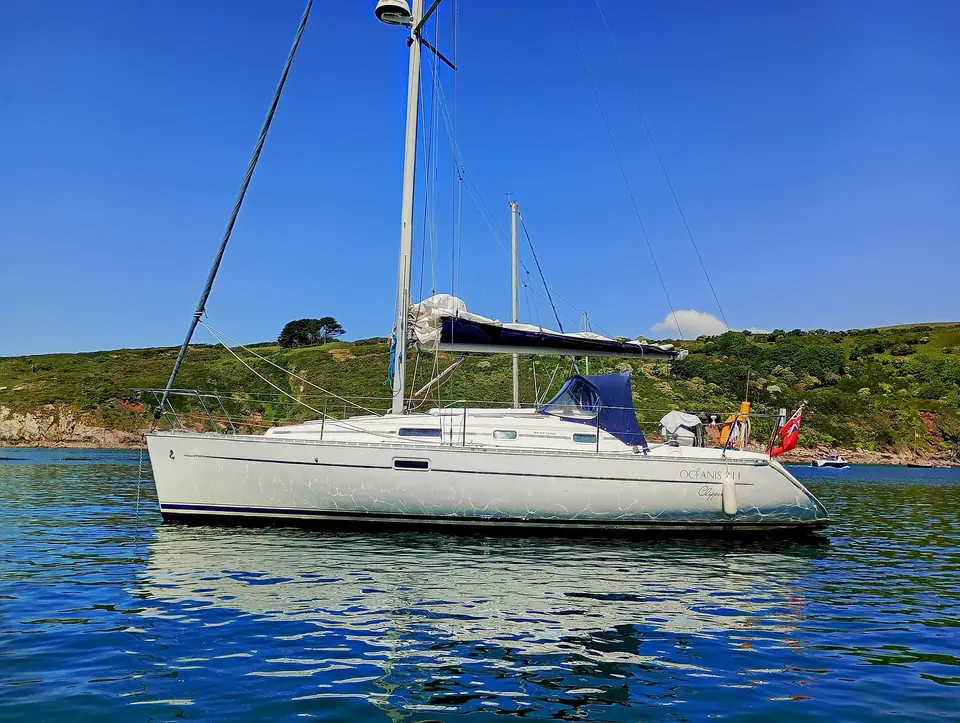
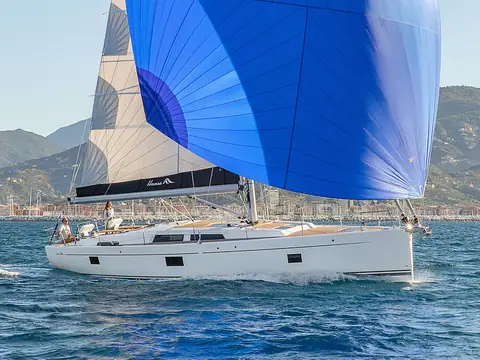
We have not found a freely licensed photo of the Beneteau Oceanis 36 CC yet, so these show other Beneteau boats, each captioned with the boat pictured.
More cruising sailboats to explore
Beneteau Oceanis Clipper 361
Cruising Sailboats, 36 ft
Used $55K to $88K
Catalina 36
Cruising Sailboats, 36 ft
Used $25K to $95K
Dufour 36 Classic
Cruising Sailboats, 36 ft
Used $50K to $85K
Hanse 371
Cruising Sailboats, 37 ft
Used $55K to $90K
Other Beneteau models
- Beneteau 49
- Beneteau 50
- Beneteau 57
- Beneteau 343
- Beneteau Antares 5.80
- Beneteau Antares 6
- Beneteau Antares 6.80
- Beneteau Antares 7
- Beneteau Antares 7.30
- Beneteau Antares 7.60
- Beneteau Antares 7.80
- Beneteau Antares 8
- Beneteau Antares 8.00
- Beneteau Antares 8.05
- Beneteau Antares 8.60
- Beneteau Antares 8.80
- Beneteau Antares 9
- Beneteau Antares 9.80
- Beneteau Antares 10.80
- Beneteau Antares 11
- Beneteau Antares 12
- Beneteau Antares 13.80
- Beneteau Antares 30
- Beneteau Antares 32
- Beneteau Antares 36
- Beneteau Antares 42
- Beneteau Antares 620 HB
- Beneteau Antares 650 HB
- Beneteau Antares 750 HB
- Beneteau Cyclades 39.3
- Beneteau Cyclades 43.3 and 43.4
- Beneteau Cyclades 50.5
- Beneteau First 18 SE
- Beneteau First 20
- Beneteau First 21.7
- Beneteau First 24
- Beneteau First 25
- Beneteau First 25.7
- Beneteau First 27
- Beneteau First 27.7
- Beneteau First 30
- Beneteau First 31.7
- Beneteau First 35
- Beneteau First 36
- Beneteau First 36.7
- Beneteau First 38
- Beneteau First 40
- Beneteau First 40.7
- Beneteau First 44
- Beneteau First 45
- Beneteau First 47.7
- Beneteau First 53
- Beneteau First 211
- Beneteau First 235
- Beneteau First 285
- Beneteau First 305
- Beneteau First 310
- Beneteau First 345
- Beneteau Flyer 6
- Beneteau Flyer 7
- Beneteau Flyer 8
- Beneteau Flyer 9
- Beneteau Flyer 10
- Beneteau Flyer 12
- Beneteau Flyer 500
- Beneteau Flyer 550
- Beneteau Flyer 650
- Beneteau Flyer 701
- Beneteau Flyer 750
- Beneteau Grand Trawler 62
- Beneteau Gran Turismo 32
- Beneteau Gran Turismo 36
- Beneteau Gran Turismo 40
- Beneteau Gran Turismo 41
- Beneteau Gran Turismo 44
- Beneteau Gran Turismo 45
- Beneteau Monte Carlo 6
- Beneteau Oceanis 30.1
- Beneteau Oceanis 31
- Beneteau Oceanis 34
- Beneteau Oceanis 34.1
- Beneteau Oceanis 35
- Beneteau Oceanis 35.1
- Beneteau Oceanis 37
- Beneteau Oceanis 38
- Beneteau Oceanis 38.1
- Beneteau Oceanis 40
- Beneteau Oceanis 40 CC
- Beneteau Oceanis 41
- Beneteau Oceanis 41.1
- Beneteau Oceanis 42
- Beneteau Oceanis 42 CC
- Beneteau Oceanis 43
- Beneteau Oceanis 44 CC
- Beneteau Oceanis 45
- Beneteau Oceanis 46
- Beneteau Oceanis 46.1
- Beneteau Oceanis 48
- Beneteau Oceanis 50
- Beneteau Oceanis 51.1
- Beneteau Oceanis 54
- Beneteau Oceanis 55
- Beneteau Oceanis 58
- Beneteau Oceanis 311
- Beneteau Oceanis 320
- Beneteau Oceanis 321
- Beneteau Oceanis 323
- Beneteau Oceanis 331
- Beneteau Oceanis 350
- Beneteau Oceanis 351
- Beneteau Oceanis 370
- Beneteau Oceanis 390
- Beneteau Oceanis 400
- Beneteau Oceanis 411
- Beneteau Oceanis 423
- Beneteau Oceanis 430
- Beneteau Oceanis 440
- Beneteau Oceanis 461
- Beneteau Oceanis 473
- Beneteau Oceanis 500
- Beneteau Oceanis 510
- Beneteau Oceanis Clipper 361
- Beneteau Oceanis Clipper 373
- Beneteau Oceanis Clipper 381
- Beneteau Oceanis Clipper 393
- Beneteau Oceanis Yacht 54
- Beneteau Oceanis Yacht 60
- Beneteau Oceanis Yacht 62
- Beneteau Sense 43
- Beneteau Sense 46
- Beneteau Sense 50
- Beneteau Sense 55
- Beneteau Swift Trawler 30
- Beneteau Swift Trawler 34
- Beneteau Swift Trawler 35
- Beneteau Swift Trawler 41
- Beneteau Swift Trawler 44
- Beneteau Swift Trawler 48
- All Beneteau models