Dehler 36 CWS, a 1980s Shorthanded Cruiser Built Around One Winch
E.G. van de Stadt's 36-footer from 1986 that led every line to a single cockpit winch and sold in the hundreds across northern Europe.
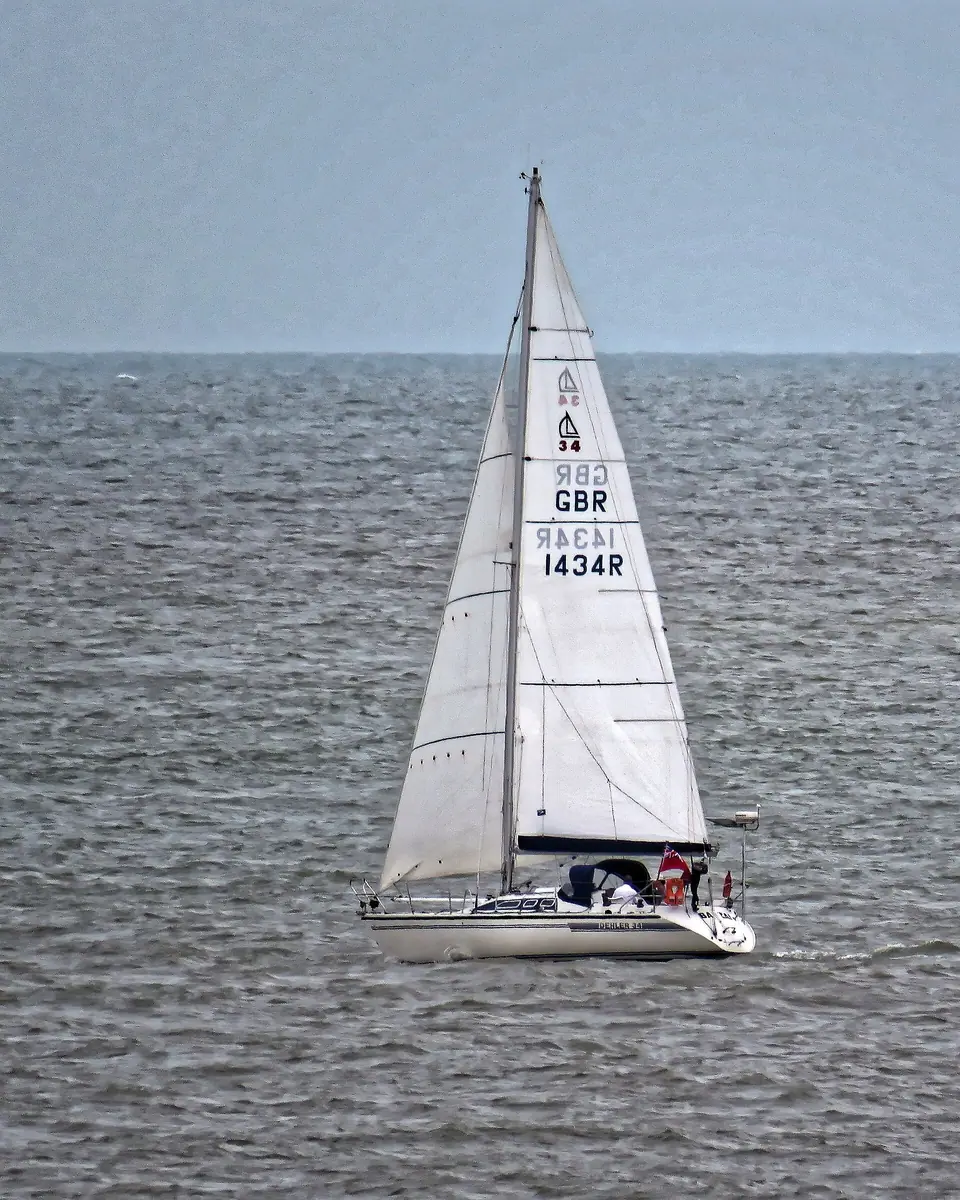
- Length
- 36.1 ft11 m
- Beam
- 11.5 ft3.5 m
- Draft
- 6.1 ft1.85 m
- Cabins
- 2 (forecabin plus aft cabin)
- Used price
- $35K to $70K
On this page
- Overview
- The idea: one winch, two people, no scrambling
- A van de Stadt hull drawn for balance rather than ratings
- Self-tacking jib and a big main
- Mahogany or Nova white: the two interiors
- Dehler 36 CWS engine and tankage
- The 36 DB and other relatives
- Buying a 36 CWS in 2026
- Specifications
- Price and value
- Strengths and weaknesses
- Used buyer checklist
- Rivals
- Our verdict
- FAQ
The Dehler 36 CWS is a van de Stadt designed 11 m sloop built in Germany from 1986 to 1994. Its central winch system and self-tacking jib made it an early shorthanded cruiser; Yachting Monthly put production at about 800 boats.
- Couples who sail shorthanded
- Budget buyers wanting a quality European cruiser
- Bay and lake cruising with occasional club racing
- Owners who enjoy restoring a classic
Dehler 36 CWS by the numbers
- Sail area to displacement
- 19.0Balanced power for coastal and offshore cruising.
- Displacement to length
- 214Moderate displacement, a classic cruising balance between load carrying and speed.
- Theoretical hull speed
- 7.3 knThe practical top speed of a displacement monohull under normal sailing, based on waterline length.
- Ballast ratio
- 43%A high ballast ratio, so the boat stands up well to a breeze.
- Capsize screening
- 1.99Below 2.0, the traditional threshold for offshore suitability.
- Motion comfort ratio
- 23.5A quicker motion in waves, typical of light, beamy hulls.
- Length to beam ratio
- 3.14 : 1Moderate proportions.
The idea: one winch, two people, no scrambling
CWS stands for central winch system, and on the Dehler 36 CWS it is not a marketing label. Every sheet and control line, from the self-tacking jib sheet to the halyards and reefing lines, runs aft through turning blocks and rope clutches to a single winch mounted on the centerline just forward of the wheel. One person at the helm can tack, trim and reef without leaving the cockpit, which in 1986 was an unusual promise for a 36-foot cruiser.
Germany's Yacht magazine sailed the prototype in 1988 in a steady Force 4 with gusts and reported that the big central winch worked perfectly, calling the boat a return to good sense and a clear rejection of the IOR rule; its point was that a partner or children could handle the winch work while the skipper steered. Yachting Monthly, testing in April 1989, agreed the system works once mastered, with one caution: complex maneuvers such as reefing must be done in the right order because one winch handles every line in turn. The winch could be powered, and a later owner told Segeln magazine that the electric winch was a great help when sailing alone.
The concept spread across the range. Dehler later built a 35 CWS, a 37 CWS, a 39 CWS on the hull of the earlier Dehler 38 and a 43 CWS, so the letters became shorthand for the yard's easy-handling cruisers of the late 1980s and early 1990s.
A van de Stadt hull drawn for balance rather than ratings
The hull was drawn by the Dutch office of E.G. van de Stadt as design number 422. Yachting Monthly described it as beamy and shallow with a fine run aft and a narrow keel and rudder, set up for speed and balanced handling. At 11.00 m (36 ft 1 in) overall with a 9.00 m (29 ft 6 in) waterline, a 3.50 m (11 ft 6 in) beam and 5,600 kg (12,348 lb) displacement, it sits in the moderate middle of 1980s cruiser-racers.
Ballast is a 2,400 kg (5,291 lb) cast iron keel, which Dehler called an upside-down keel because the bulb is carried at the bottom; that gives a ballast ratio near 43 percent, high for a production cruiser and a big part of why the boat stands up to a breeze. Standard draft is 1.85 m (6 ft 1 in), and the owner's manual also lists a wing keel drawing just 1.50 m (4 ft 11 in), a useful find for Chesapeake or Florida sailors.
Self-tacking jib and a big main
The owner's manual lists a 40 m2 fully battened mainsail and a 21.7 m2 self-tacking jib that can be reefed, on a 7/8 fractional rig with twin spreaders, no running backstays and a mast standing 16.92 m above the waterline. Dehler's pitch was that one sail set covers every weather; for light air an adjustable hoist takes a 50.6 m2 masthead genoa, a 91 m2 spinnaker or a 114.8 m2 masthead spinnaker. The trade-off of any self-tacker is less power when reaching in light wind, and the later 35 CWS switched to an overlapping headsail and two winches for that reason.
For an American owner who sails shorthanded on a bay or a lake, the 36 CWS rig is still a sensible arrangement four decades on. Adding a furling gennaker or a code sail on a short sprit is a common way to restore light-air reaching power without complicating the upwind setup.
Mahogany or Nova white: the two interiors
Dehler offered two interior styles. The standard version used mahogany trim; the Nova interior used pearl-white ash with a white lacquer finish, and Dehler's own description pairs it with gray Kalico leather upholstery. Both share a layout with a forecabin, an aft double, a 2.50 m galley and a saloon, and the yard added touches that were rare in 1988: indirect lighting, illuminated companionway steps and a corner cabinet for a TV and stereo. Yachting Monthly singled out the huge galley, berths longer than average and excellent stowage, and called the boat exceptionally well engineered and put together.
Lacquered white joinery is harder to keep looking fresh than varnished mahogany. Chips and yellowing are common on Nova boats, and refinishing is a skilled job, so factor the interior's condition into any offer. On the positive side, a well-kept Nova boat is distinctive and photographs well when it is time to resell.
Dehler 36 CWS engine and tankage
The owner's manual lists a Yanmar 2GM of 18 hp as standard and a three-cylinder 3GM of 27 hp as an option. Many boats have since been repowered, so ask for the engine model, installation date and hours rather than assuming it is original. Tanks hold about 150 liters (40 gallons) of diesel and 240 liters (63 gallons) of water, generous for a boat of this size and era and enough for a couple to cruise for a week or more.
No independent motoring speed or fuel figures were published. Hull speed on the 29 ft 6 in waterline is about 7.3 knots, and a healthy two-cylinder diesel will push the boat at a comfortable passage speed somewhat below that.
The 36 DB and other relatives
Do not confuse the 36 CWS with the Dehler 36 DB, a van de Stadt sister from about 1990 with a taller rig (P of 14.50 m against 13.50 m) and about 63.8 m2 of sail, aimed at racing. Nor is it related to the Judel/Vrolijk Dehler 36 launched in 2001, a lighter, longer-waterline boat with a conventional deck layout.
The 35 CWS of 1993 used a similar but narrower hull with a longer waterline, a modified interior and an overlapping genoa; sailboatdata counts 280 of those. If you are searching for a shorthanded Dehler from this period, all of the CWS models share the same philosophy, but the 36 is the one that sold in the largest numbers.
Buying a 36 CWS in 2026
The youngest boats are now more than thirty years old, so the survey matters more than the brochure. The good news is that Dehler's build quality from this period has a solid reputation and that the design has no known structural flaws reported in the sources we reviewed. The work tends to be the predictable kind: engines, standing rigging, sails, deck hardware and electrics that have reached the end of their lives.
Expect asking prices from roughly $35,000 for a tired boat to about $70,000 for one with a recent engine, sails and rigging. Annual running costs for slip, insurance, haul-out and routine maintenance run about $6,000 to $14,000 in most US regions, plus a reserve for the big-ticket items an older boat will eventually need.
Dehler 36 CWS specifications
| Length overall | 36.1 ft11 m |
|---|---|
| Waterline length | 29.5 ft9 m |
| Beam | 11.5 ft3.5 m |
| Draft | 6.1 ft1.85 m |
| Air draft | 55.5 ft16.92 m |
| Displacement | 12,348 lbs5,6 kg |
| Ballast | 5,291 lbs2,4 kg |
| Sail area | 636 sq ft59.1 m² |
| Fuel capacity | 4 gal15 L |
| Fresh water | 63 gal24 L |
| Cabins | 2 (forecabin plus aft cabin) |
| Standard engines | Yanmar 2GM diesel, 18 hp |
| Optional engines | Yanmar 3GM diesel, 27 hp |
| Maximum power | 27 hp |
| Hull type | Beamy, shallow-bodied fin keel cruiser with a fine run aft and spade rudder |
| Keel | Cast iron upside-down bulb keel, 1.85 m (6 ft 1 in); wing keel 1.50 m (4 ft 11 in) option |
| Rig | 7/8 fractional sloop, twin spreaders, no running backstays, full-batten main with drop system, reefable self-tacking jib; all lines led to one central cockpit winch (CWS), electric winch optional |
| Hull construction | GRP with cast iron fin keel |
| Builder | Dehler Yachtbau, Freienohl, Germany |
| Naval architect | E.G. van de Stadt (design no. 422) |
| Production | 1986 to 1994 |
| Status | Discontinued |
Figures come from builder documentation and independent tests where available. Displacement is usually quoted light, so a loaded cruising boat will weigh more. Compare these specs with another model.
How much does a Dehler 36 CWS cost?
Most 36 CWS boats are in Germany, the Netherlands, Scandinavia and the UK, where a 1992 example was listed in 2026 at 49,000 euros. Yachting Monthly's used-boat guide put typical values for the closely related 35 CWS at 45,000 to 60,000 pounds. In the US the model is rare, so a well-kept boat already on this side of the Atlantic can command the top of the range, while an import adds shipping and survey travel. Engine hours, the condition of the central winch hardware and whether the original sails and standing rigging have been replaced matter far more than the exact model year.
Estimate your yearly cost
A planning estimate using common rules of thumb: insurance near 1.5 percent of value, maintenance near 3 percent, haul out and bottom paint by length. Your marina, region and use will move these numbers. Open the full cost calculator.
Versions and options
- Wing keel
- Shoal option drawing 1.50 m instead of 1.85 m.
- Standard interior
- Mahogany trim, forecabin and aft cabin.
- Nova interior
- Pearly white lacquered joinery with the same layout; striking but harder to maintain.
- Dehler 36 DB (c. 1990)
- Racing-oriented van de Stadt sister with a taller rig and conventional winches.
Dehler 36 CWS timeline
- 1986Dehler 36 CWS goes into production at Freienohl
- 1988The boat introduces Dehler to British cruising sailors
- 1989Yachting Monthly publishes its test report
- 1993The narrower 35 CWS joins the range
- 1994Production of the 36 CWS ends after about 800 boats
Strengths and weaknesses
What owners like
- Central winch system makes shorthanded sailing simple
- Self-tacking jib for effortless tacking
- High ballast ratio and a stiff, balanced hull
- Large galley, long berths and excellent stowage
- Generous fuel and water tanks for its size
- Solid build reputation
What to weigh up
- Single winch slows racing maneuvers
- Self-tacker lacks reaching power in light air
- Lacquered Nova interiors are hard to refinish
- Rare in the US, so many purchases involve import
- Every boat is now 30 to 40 years old
Used Dehler 36 CWS buyer checklist
Take this list to a viewing. Your ticks are saved in this browser so you can come back to it.
Always commission an independent marine survey and an engine survey before you buy. How a marine survey works.
Rivals to consider
Beneteau First 345
French cruiser-racer of the same era, easy to find in the US but without the central winch concept.
Compare side by sideHallberg-Rassy 352
Heavier, slower Swedish cruiser with a center cockpit feel, for owners who value comfort over pace.
Compare side by sideX-Yachts X-362
Danish performance cruiser of the late 1980s, livelier upwind and more race oriented.
Catalina 36
The common American alternative, roomier and easier to find, but less refined under sail.
Compare side by sideOur verdict on the Dehler 36 CWS
The Dehler 36 CWS was a shorthanded sailing boat before the term was fashionable, and the central winch system still makes it one of the easiest 36-footers of its generation for a couple to handle. A high ballast ratio, a balanced van de Stadt hull and solid German construction give it a sound foundation. What you are really buying in 2026, though, is a 30-plus-year-old boat, so the engine, rigging, sails and interior finish decide the value. Find one that has had those refreshed and you get a capable, characterful cruiser for the price of a new small daysailer.
Dehler 36 CWS questions answered
What does CWS mean on a Dehler?
Central winch system. All sheets and control lines are led to a single winch just forward of the wheel so one person can handle the boat.
When was the Dehler 36 CWS built?
From 1986 to 1994, according to sailboatdata. Yachting Monthly estimated that about 800 were built.
Who designed the Dehler 36 CWS?
The Dutch firm of E.G. van de Stadt, as design number 422.
How much is a used Dehler 36 CWS worth?
Typically about $35,000 to $70,000 in 2026, depending on engine, sails, rigging and interior condition. A 1992 boat was listed in Europe at 49,000 euros.
What is the draft of the Dehler 36 CWS?
About 1.85 m, or 6 ft 1 in, with the standard cast iron keel. A wing keel drawing 1.50 m (4 ft 11 in) was also listed.
Is the Dehler 36 CWS the same as the Dehler 36?
No. The Dehler 36 of 2001 is a different Judel/Vrolijk design with a conventional deck layout and a longer waterline.
More performance sailboats to explore
Beneteau First 36
Performance Sailboats, 36 ft
Used $250K to $360K
Dehler 36
Performance Sailboats, 36 ft
Used $65K to $120K
Beneteau First 36.7
Performance Sailboats, 36 ft
Used $55K to $105K
J/111
Performance Sailboats, 37 ft
Used $150K to $275K