Fairline Yachts Sport Yachts & Express Cruisers
Fairline Targa 33, the Original Targa Explained
Sam Newington's Riviera runabout grew into Fairline's most famous family: an Olesinski-designed 33-footer built from 1984 to 1991, 357 of them.
- Length
- 33 ft10.06 m
- Beam
- 11.4 ft3.48 m
- Cabins
- 1 plus open forward berth (original) or 2 (Touring layout)
- Used price
- $20K to $60K
On this page
- Overview
- A boat built for the owner's own mooring in Port Grimaud
- Open-plan or Touring: the two Targa 33 layouts
- Diesel sweet spot or gasoline muscle
- Why the 33's dimensions are hard to pin down
- The styling that made it a period icon
- Buying a 1980s Targa 33 in 2026
- What it costs to keep one running
- Specifications
- Price and value
- Strengths and weaknesses
- Used buyer checklist
- Rivals
- Our verdict
- FAQ
The Fairline Targa 33 was the first Targa, designed by Bernard Olesinski and built from the mid-1980s to 1991. Twin 200 hp Volvo diesels gave 30-plus knots. Used boats now sell for roughly $20,000 to $60,000.
- Classic-boat enthusiasts
- Budget weekenders in protected waters
- Buyers who want a refit project with a famous name
Fairline Targa 33 by the numbers
- Displacement hull speed
- 7.2 knThe efficient cruising speed for a displacement hull of this waterline.
- Length to beam ratio
- 2.89 : 1A beamy hull with lots of volume for its length.
A boat built for the owner's own mooring in Port Grimaud
The Fairline Targa 33 exists because Fairline's chairman wanted one. Sam Newington and his wife Briony kept a holiday home in Port Grimaud on the French Riviera, and the biggest sports cruiser Fairline built at the time was the 26-foot Sunfury and its lower, sportier Sportfury sister. They wanted something larger to keep outside the house, so Bernard Olesinski, who drew every Fairline from the late 1970s onward, was asked to design it.
MBY dates the launch to 1984; Fairline's own history page says the first Targa arrived in 1985 and set the benchmark for the modern express cruiser. Either way, it combined the Sportfury's rakish forward-sloping arch with the Sunfury's practicality in a 33-foot hull, and it worked. Fairline sold 357 of them before production ended in 1991, which made it one of the yard's most successful models.
Every later Targa, from the 1990s Targa 34 to today's Targa 40 and Targa 58 GTO, descends from this boat. When MBY ran an original 33 alongside a 2010 Targa 38, the testers concluded that 25 years of development had not changed the basic recipe much.
Open-plan or Touring: the two Targa 33 layouts
The first boats had an open-plan interior. A U-shaped dinette sat in the saloon and you scrambled over it to reach a double berth in the bow, with a separate mid cabin tucked under the cockpit. It suited the sunny day-boat use the Newingtons had in mind, but it offered little privacy.
About three years after launch Fairline introduced the Touring layout. The dinette moved to one side, which freed room for a proper separate forward cabin, giving two dedicated sleeping cabins. Buyers voted with their checkbooks: the original arrangement was quietly dropped. Most boats you will see for sale today are Touring boats with four berths, a galley and one heads compartment.
If a listing shows a big U-shaped settee running into the bow with no forward bulkhead door, you are looking at an early open-plan boat. It is not worse, simply different, and it can be a good choice for a couple who rarely sleep aboard with guests.
Diesel sweet spot or gasoline muscle
Fairline offered twin gasoline V8s, and the biggest 7.4-liter big-block engines gave the Targa 33 genuine 40-knot performance. That was headline stuff in the 1980s, but the fuel bills were heavy and gasoline sterndrive boats of this age need careful ventilation and fuel-system checks.
The installation MBY singles out is twin Volvo Penta AQAD41 diesels of 200 hp each. They hit the sweet spot, with a top speed in the low 30s and far better fuel economy. Many surviving boats use AD41 engines, often rebuilt; some late boats are advertised with 230 hp Volvo diesels instead.
Whichever you choose, remember that the engines are now 35 to 40 years old unless they have been replaced or reconditioned. A boat with fresh engine invoices is worth far more than one with original units of unknown history.
- Twin Volvo Penta AQAD41 200 hp diesels: 30-plus knots, best economy
- Twin gasoline V8s up to 7.4 liters: about 40 knots, heavy fuel burn
- Sterndrive propulsion throughout, so bellows and drives are routine maintenance
Why the 33's dimensions are hard to pin down
Brochures of the 1980s measured length to the flat transom because the bathing platform was a bolt-on rather than part of the hull molding. That is why listings quote anything from about 9.9 to 10.4 meters for the same model. When MBY rafted a 33 next to a 2006-design Targa 38 with the transoms aligned, the two bows were almost side by side, despite the five-foot difference in model numbers.
Beam is consistently given as about 3.48 meters, roughly 11 feet 5 inches, and MBY noted the later 38 gained only about six inches over it. Fuel capacities in adverts vary widely, so measure or confirm the tank on the boat you are buying rather than trusting a listing.
We have left draft, weight and tankage blank in the specification table because we could not find a factory figure, and listings contradict each other.
The styling that made it a period icon
MBY includes the original Targa 33 in its World's Coolest Boats series, and you can see why. The low profile, forward-raked arch and clean foredeck looked fast standing still at a time when many cruisers were boxy. The helm station is simple and purposeful, and many owners have retrofitted a modern chartplotter without spoiling it.
The open cockpit is the boat's living room. Listings for well-kept boats usually include a full cockpit canopy with standing headroom, which turns the 33 into a usable cruiser in northern climates. In the US, where most buyers will be using the boat in warmer water, a bimini and good ventilation below are more important.
Buying a 1980s Targa 33 in 2026
Any Targa 33 is now between about 35 and 42 years old. The hand-laid GRP hulls of the period are generally robust, but survey them as you would any vintage boat: moisture readings around the transom and drive cutouts, stringer and engine-bed integrity, and the condition of the deck core around fittings.
Most value sits in recent work. The 1988 boat advertised in Essex in 2026 had reconditioned AD41 diesels, electric trim tabs, an electric windlass, diesel heating and a modern Raymarine plotter, and its asking price reflected roughly 70,000 pounds spent over a few years. A tired boat with original engines may cost a third of that and need the same money spent.
The listing year can mislead. Some boats are advertised as 1992 or later models, but MBY records that Targa 33 production ceased in 1991, so a later date usually reflects first registration or commissioning.
What it costs to keep one running
Plan on roughly $7,000 to $16,000 a year in the US for a diesel Targa 33, covering a 34-foot slip or storage, insurance from a specialist classic-boat underwriter, annual engine and drive servicing, bellows every few years, antifouling and canvas. Gasoline boats cost less to service but more to run.
Use it as a day boat and weekender for two to four people. With twin diesels and a deep-V hull it will cross open water in decent conditions, but parts availability for old Volvo drives and the age of wiring mean conservative passage planning is wise.
Fairline Targa 33 specifications
| Length overall | 33 ft10.06 m |
|---|---|
| Beam | 11.4 ft3.48 m |
| Cabins | 1 plus open forward berth (original) or 2 (Touring layout) |
| Berths | 4 to 6 |
| Heads | 1 |
| Standard engines | 2 x Volvo Penta AQAD41 200 hp diesels with sterndrives |
| Optional engines | Twin gasoline V8 sterndrives up to 7.4-liter big-blocks |
| Top speed | 40 knots |
| Hull type | Deep-V planing hull with sterndrives |
| Hull construction | GRP (fiberglass) |
| Builder | Fairline Boats, United Kingdom |
| Naval architect | Bernard Olesinski |
| Production | 1984 to 1991 |
| Status | Discontinued |
Figures come from builder documentation and independent tests where available. Displacement is usually quoted light, so a loaded cruising boat will weigh more. Compare these specs with another model.
How much does a Fairline Targa 33 cost?
Values depend almost entirely on engine condition and the quality of past refits. In 2026 a 1986 boat in Italy was asked at under 20,000 euros, while a 1988 boat with reconditioned AD41 diesels and about 70,000 pounds of documented work was asked at 44,995 pounds. Diesel boats with the Touring two-cabin layout command the premium; gasoline big-block boats are cheaper to buy and far thirstier.
Estimate your yearly cost
A planning estimate using common rules of thumb: insurance near 1.5 percent of value, maintenance near 3 percent, haul out and bottom paint by length. Your marina, region and use will move these numbers. Open the full cost calculator.
Fairline Targa 33 timeline
- 1984MBY dates the launch of the first Targa 33, designed by Bernard Olesinski.
- 1985Fairline's official history records the arrival of its first Targa.
- 1987The Touring layout adds a separate forward cabin and soon replaces the open-plan interior.
- 1991Production ends after 357 Targa 33s.
- 2013MBY runs an original 33 against a 2010 Targa 38 to show how little the formula changed.
Strengths and weaknesses
What owners like
- The original Targa, with real period style
- Olesinski deep-V hull that still handles well
- Diesel versions are frugal and reach the low 30s
- Touring layout gives two separate cabins
- Very low entry price
What to weigh up
- Every boat is 35-plus years old
- Factory specifications are hard to verify
- Gasoline big-block versions are thirsty
- Few examples in the US, so most are imports
Used Fairline Targa 33 buyer checklist
Take this list to a viewing. Your ticks are saved in this browser so you can come back to it.
Always commission an independent marine survey and an engine survey before you buy. How a marine survey works.
Rivals to consider
Sea Ray 340 Sundancer
Common American alternative with easier parts supply, usually gasoline-powered.
Compare side by sideFairline Targa 34
The 1997 to 2006 successor, much more modern and still affordable.
Compare side by sideFairline Targa 38
The 2006-design descendant that MBY tested side by side with an original 33.
Compare side by sideOur verdict on the Fairline Targa 33
The Fairline Targa 33 matters more as a historical boat than as a practical buy, but it remains both. It created the Targa line, sold 357 copies and still turns heads. As a purchase it is only as good as the last owner's maintenance: a Touring-layout boat with rebuilt diesels and a sound transom is a characterful, inexpensive weekender, while a neglected one is a project that will absorb more than its price. Survey hard, ignore listing years after 1991, and buy the engines rather than the hull.
Fairline Targa 33 questions answered
When was the Fairline Targa 33 built?
From the mid-1980s to 1991. MBY dates the launch to 1984 and Fairline to 1985, and production ended in 1991 after 357 boats.
Is there a 1996 Fairline Targa 33?
No factory-built 1996 Targa 33 exists as far as we can verify, because MBY records that production ended in 1991. A later date in a listing usually reflects registration or commissioning, or a different Targa model.
How fast is a Fairline Targa 33?
Twin 200 hp Volvo diesels give a top speed in the low 30s, while the largest 7.4-liter gasoline V8s delivered about 40 knots.
Who designed the Targa 33?
Bernard Olesinski, who designed Fairline's boats from the late 1970s onward.
How much is a used Fairline Targa 33?
Roughly $20,000 to $60,000, with the best-documented diesel boats at the top of the range.
Photos from the Fairline Yachts range
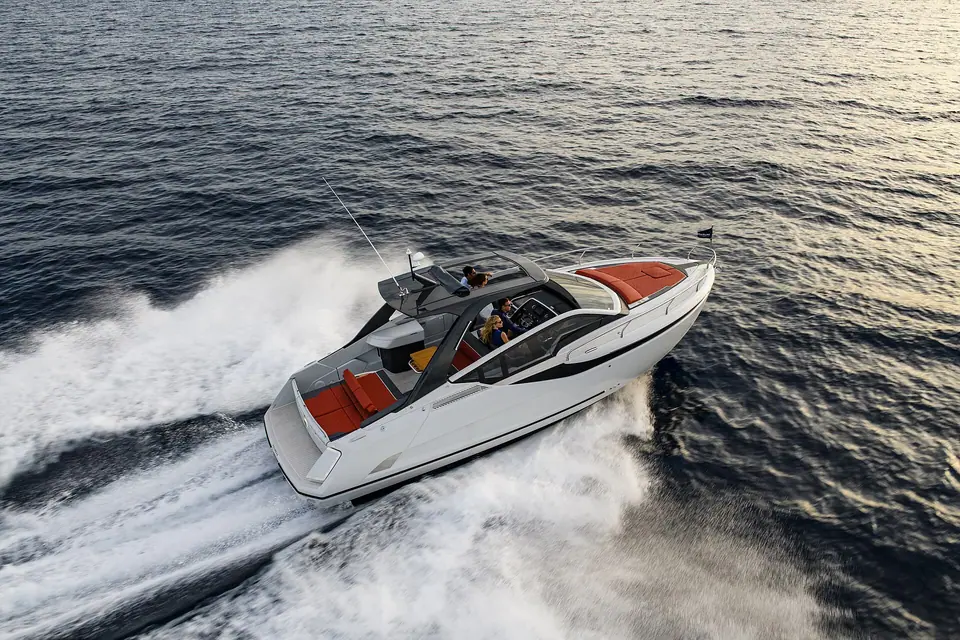
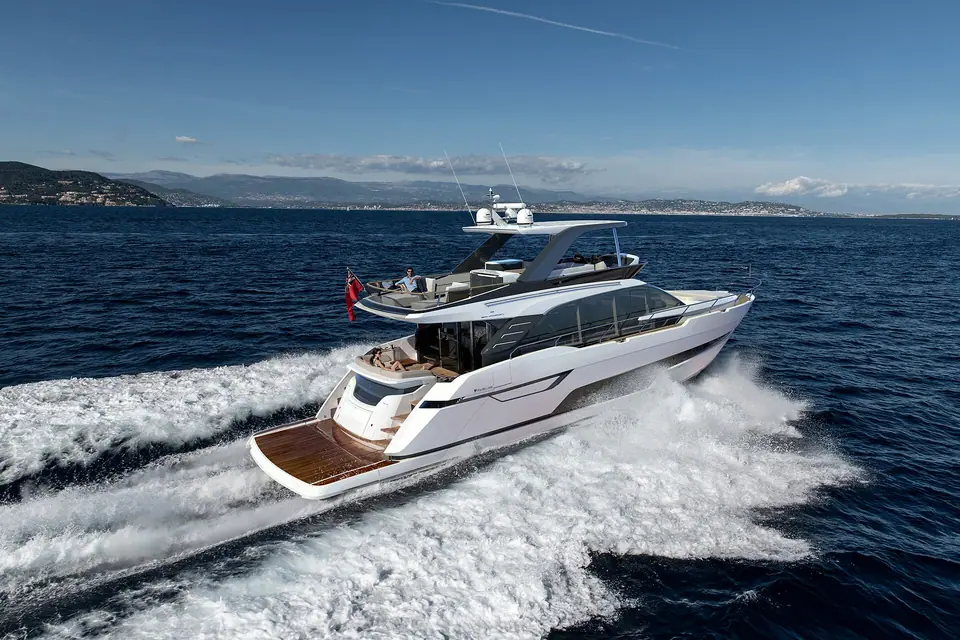
We have not found a freely licensed photo of the Fairline Targa 33 yet, so these show other Fairline Yachts boats, each captioned with the boat pictured.
More sport yachts & express cruisers to explore
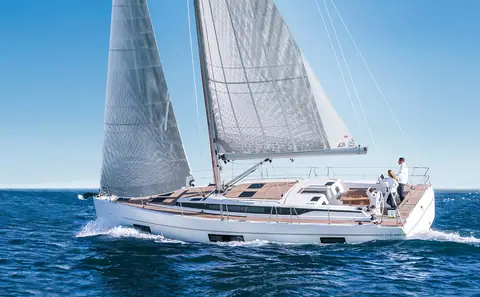
Bavaria S33
Sport Yachts & Express Cruisers, 33 ft
Used $95K to $250K
Bavaria Sport 32
Sport Yachts & Express Cruisers, 33 ft
Used $90K to $175K
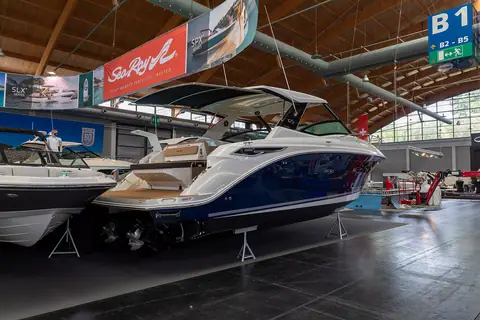
Sea Ray Sundancer 320
Sport Yachts & Express Cruisers, 33 ft
Used $210K to $480K
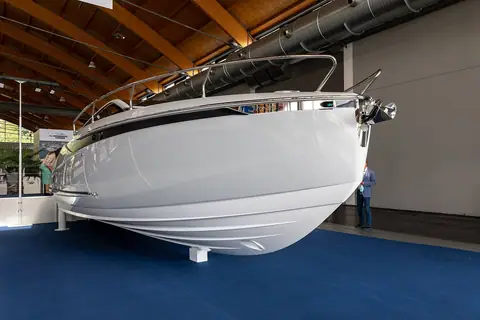
Fairline F//Line 33
Sport Yachts & Express Cruisers, 33 ft
Used $230K to $470K
Other Fairline Yachts models
- Fairline F//Line 33
- Fairline Phantom 40
- Fairline Phantom 48
- Fairline Phantom 50
- Fairline Squadron 50
- Fairline Squadron 55
- Fairline Squadron 58
- Fairline Squadron 68
- Fairline Targa 29
- Fairline Targa 31
- Fairline Targa 34
- Fairline Targa 37
- Fairline Targa 38
- Fairline Targa 40
- Fairline Targa 43
- Fairline Targa 44
- Fairline Targa 45 GT
- Fairline Targa 48
- Fairline Targa 52
- Fairline Targa 58 Gran Turismo
- All Fairline Yachts models