Donzi Marine Performance Powerboats
Donzi Sweet 16, the Little Deep-V That Started a Legend
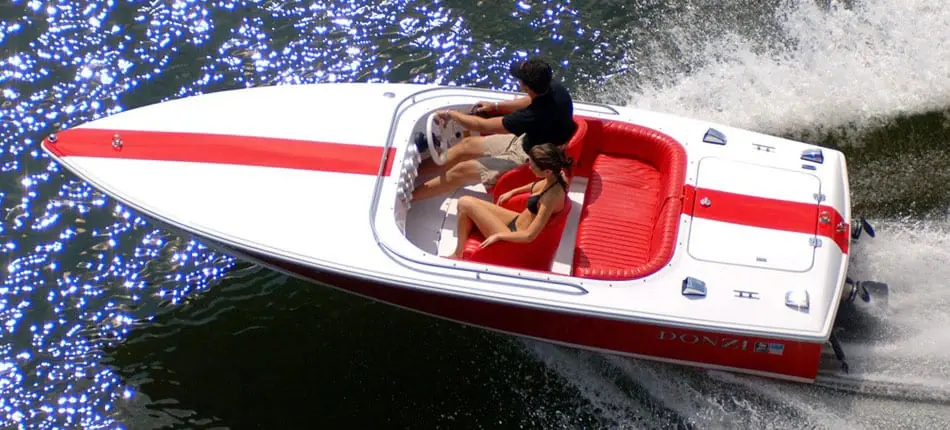
Sixteen feet of 1960s deep-V attitude from Don Aronow's Donzi, still one of the most coveted small performance boats in America.
- Length
- 16.4 ft5 m
- Beam
- 6.9 ft2.11 m
- Cruise
- 2.4 ft0.74 m
- Cabins
- None
- Used price
- $8K to $65K
On this page
- Overview
- The Donzi Sweet 16 and Aronow's 18-month company
- Offshore racing ideas in a 16-foot package
- A V8 in a 16-foot boat
- The later 16 Classic
- Restoring a Sweet 16 without regrets
- Owning a Sweet 16 today
- The Donzi Sweet 16 outboard question
- Collector values and what drives them
- Specifications
- Price and value
- Strengths and weaknesses
- Used buyer checklist
- Rivals
- Our verdict
- FAQ
The Donzi 16, nicknamed the Sweet 16, was the first boat from Don Aronow's Donzi Marine in 1964, a tiny deep-V runabout with V8 sterndrive power that became a collector icon and was later revived as the 16 Classic.
- Classic boat collectors
- Solo or couple day trips
- Lake and bay runs
- Restoration enthusiasts
Donzi 16 Classic by the numbers
- Horsepower per ton
- 208 hpVery high power to weight, built for speed.
- Displacement hull speed
- 5.1 knThe efficient cruising speed for a displacement hull of this waterline.
- Length to beam ratio
- 2.37 : 1A beamy hull with lots of volume for its length.
The Donzi Sweet 16 and Aronow's 18-month company
Don Aronow started Donzi Marine in 1964, between his Formula Marine venture of 1962 and the Magnum Marine and Cigarette companies that came later. He sold Donzi to Teleflex in mid-1965, so his personal ownership lasted barely more than a year. Yet the boat that launched the company, the 16-foot runabout that owners quickly nicknamed the Donzi Sweet 16, outlived his tenure by decades and became one of the most recognized small boats in American history.
The hull was drawn by the Jim Wynne and Walt Walters design team that worked with Aronow on his early boats. Their goal was to shrink the deep-V principles proven in offshore racing into a boat small enough for one person to trailer, launch and drive, and still powerful enough to feel like a race boat. The result was a tiny, aggressive hull with a sharp entry, lifting strakes and a V8 engine.
Donzi is still building boats today under Iconic Marine Group, with a range that includes the 22 Classic, the 38 ZRC and larger luxury sport models, and the company traces its heritage directly back to 1964 and the 16.
Offshore racing ideas in a 16-foot package
A deep-V hull on a 16-foot boat was a radical idea in the mid 1960s, when most small runabouts had flat or modified-V bottoms. The Sweet 16's deep V lets it cut through chop at speed instead of slamming, which is why owners often describe it as riding like a much bigger boat. Lifting strakes add grip and lift, helping the boat get on plane quickly and stay stable at speed. Donzi's own specification for the 16 Classic lists 16 feet 5 inches overall, a 6 foot 11 inch beam, 24 degrees of deadrise and a hull weight of about 2,400 to 2,500 pounds, with 30 to 32 gallons of fuel depending on the year.
The trade-off is stability at rest. A narrow, deep-V boat rolls more at anchor or when people move around, and the cockpit is small. It is a boat for running, not for lounging.
- Deep-V hull adapted from offshore racing designs
- Lifting strakes for grip and quick planing
- V8 sterndrive power on most boats
- Compact enough to trailer behind a car or small truck
A V8 in a 16-foot boat
Most Sweet 16s were built with a single V8 engine driving a sterndrive. Engine makes and sizes varied over the years and between dealers, and many boats have since been repowered, so the engine in a particular boat may not match its original build. Always check the engine and drive serial numbers and ask for documentation.
A well-sorted Sweet 16 with a healthy small-block V8 runs in the 40s to 50s mph, and modified boats can go faster. These are estimates from the classic boat community rather than factory figures. At those speeds a 16-foot boat feels very fast, and the deep-V gives it the composure to handle it.
Fuel consumption at cruise is modest by performance boat standards, roughly 8 to 12 gallons per hour depending on engine and speed, which makes the Sweet 16 one of the most affordable ways to own a genuine performance boat.
The later 16 Classic
Donzi revived the design as the 16 Classic, keeping the shape that made the original famous while updating construction, hardware and power to more modern standards. The 1999 brochure rated it for up to 220 hp, while the 2013 version came with a 260 hp MerCruiser 5.0 MPI Alpha sterndrive, and in 2014 Donzi offered the Sweet 16 in a 50th-Anniversary Classic Series. These boats are easier to own than 1960s originals, with more reliable engines and fewer restoration concerns, and they are often a smarter choice for buyers who want to use the boat rather than show it.
Collectors still prefer original 1960s boats, but the 16 Classic offers much of the same driving experience at lower prices and with less risk.
Restoring a Sweet 16 without regrets
Many Sweet 16s on the market are project boats. The most common issues are rotten wooden stringers and transoms, soft floors, tired wiring and worn sterndrives. Fiberglass boats of this age typically used wood for structural reinforcement, and water intrusion over decades causes rot.
A full restoration with new stringers, transom, engine and drive can cost more than the finished boat is worth, so buyers should budget carefully. The best approach for most people is to pay more for a boat that has already been properly restored, with photos and receipts documenting the work.
Owning a Sweet 16 today
Annual running costs are low by boat standards, typically $3,000 to $9,000 for storage, insurance, maintenance and fuel. The boat is easily trailered and stored in a garage, which saves slip fees.
Parts for common V8 engines and sterndrives are widely available, while original Donzi hardware, windshields and trim can be harder to find. An active community of Donzi owners and clubs shares parts sources, restoration advice and events.
The Donzi Sweet 16 outboard question
Searches for a Donzi Sweet 16 outboard are common. The boat was designed around inboard V8 sterndrive power, but some owners have converted boats to outboard power to save weight, simplify maintenance and free up interior space. Outboard conversions can work well if done properly, with a reinforced transom and careful balance, but they reduce collector value.
If originality matters to you, stick with an inboard boat. If you want a reliable, low-maintenance runabout, a well-executed outboard conversion can make sense, but have the transom surveyed carefully.
Collector values and what drives them
Sweet 16 prices have climbed as collectors seek out original 1960s boats. Documented history, original hardware, correct colors and a professional restoration bring the highest prices. Boats with notable ownership history or racing pedigree can bring more.
Later boats and modified examples are more affordable and often better for daily use. Either way, the Sweet 16's iconic status helps support values.
Donzi 16 Classic specifications
| Length overall | 16.4 ft5 m |
|---|---|
| Beam | 6.9 ft2.11 m |
| Draft | 2.4 ft0.74 m |
| Displacement | 2,5 lbs1,134 kg |
| Fuel capacity | 32 gal121 L |
| Cabins | None |
| Berths | None |
| Heads | None |
| Standard engines | Single V8 sterndrive; the 2013 16 Classic used a 260 hp MerCruiser 5.0 MPI Alpha (engine make and size vary by year) |
| Maximum power | 260 hp |
| Hull type | Deep-V planing hull, 24 degree deadrise |
| Hull construction | Fiberglass |
| Builder | Donzi Marine, United States |
| Naval architect | Jim Wynne and Walt Walters |
| Other design credits | Don Aronow (founder and concept) |
| Production | 1964 to present |
| Status | Discontinued |
Figures come from builder documentation and independent tests where available. Displacement is usually quoted light, so a loaded cruising boat will weigh more. Compare these specs with another model.
How much does a Donzi 16 Classic cost?
Original 1960s boats with documented history, correct hardware and a professional restoration bring the highest prices and are bought by collectors. Later 16 Classics in good running condition sell for less, while project boats with rotten stringers or seized engines can be found for under $10,000. Restoration quality, originality and engine condition matter far more than the year.
Estimate your yearly cost
A planning estimate using common rules of thumb: insurance near 1.5 percent of value, maintenance near 3 percent, haul out and bottom paint by length. Your marina, region and use will move these numbers. Open the full cost calculator.
Versions and options
- Original Sweet 16 (1960s)
- The first Donzi model with V8 sterndrive power, now prized by collectors.
- 16 Classic
- Later revival with updated construction and power, easier to own and use.
- Outboard conversions
- Owner-modified boats with outboard power, lighter and simpler but less collectible.
Donzi 16 Classic timeline
- 1962Don Aronow forms Formula Marine
- 1964Aronow starts Donzi Marine and introduces the 16-foot runabout
- 1965Aronow sells Donzi to Teleflex
- 1966Aronow founds Magnum Marine, followed by Cigarette in 1970
- 2026Donzi continues under Iconic Marine Group, with the 22 Classic carrying the Sweet 16's styling forward
Strengths and weaknesses
What owners like
- Iconic design with strong collector appeal
- Deep-V hull that handles chop well for its size
- V8 power in a small, light boat
- Easy to trailer and store
- Low running costs
What to weigh up
- Small cockpit and limited seating
- Rolls at rest due to deep-V shape
- Older boats often need costly restoration
- Original hardware can be hard to find
Used Donzi 16 Classic buyer checklist
Take this list to a viewing. Your ticks are saved in this browser so you can come back to it.
Always commission an independent marine survey and an engine survey before you buy. How a marine survey works.
Rivals to consider
Donzi 22 Classic
Donzi's current production classic, larger and more practical for families.
Compare side by sideFormula 233
Aronow's earlier Formula design, a larger 1960s deep-V runabout with a similar heritage.
Chris-Craft Launch 27
A modern premium day boat for buyers who want classic styling with new-boat comfort.
Compare side by sideOur verdict on the Donzi 16 Classic
The Donzi Sweet 16 is one of the most important small boats ever built in America, a pocket offshore racer that put deep-V performance within reach of everyday buyers. Original 1960s boats are collector pieces worth buying restored rather than restoring, while later 16 Classics offer the same thrill with less risk. Either way, it remains one of the purest and most affordable ways to experience the Aronow era of performance boating.
Donzi 16 Classic questions answered
How much is a Donzi Sweet 16 for sale?
Prices range from under $10,000 for project boats to about $65,000 for professionally restored 1960s originals. Later 16 Classics typically sell for $12,000 to $35,000.
Who designed the Donzi Sweet 16?
The hull was drawn by Jim Wynne and Walt Walters for Don Aronow, who founded Donzi Marine in 1964.
How fast is a Donzi Sweet 16?
A well-sorted Sweet 16 with a healthy V8 typically runs in the 40s to 50s mph, and modified boats can go faster.
Is there a Donzi Sweet 16 with an outboard?
The boat was designed for inboard V8 sterndrive power, but some owners have converted boats to outboards. These conversions reduce collector value.
Does Donzi still make the Sweet 16?
Not currently. Donzi's current lineup includes the 22 Classic, 38 ZRC and larger luxury models under Iconic Marine Group.
More performance powerboats to explore
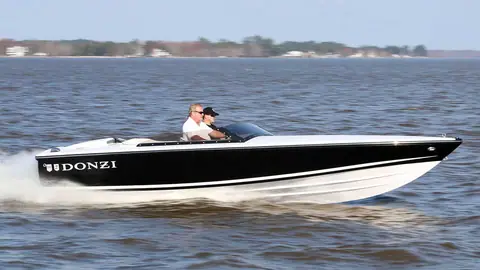
Donzi 22 Classic
Performance Powerboats, 23 ft
Used $30K to $150K
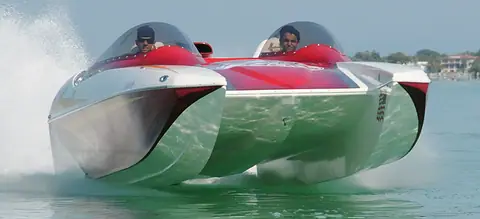
Eliminator 25 Daytona
Performance Powerboats, 25 ft
Used $30K to $95K
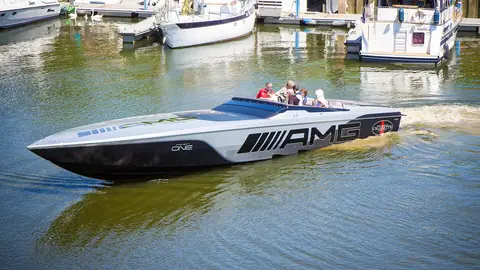
Fearless 28
Performance Powerboats, 28 ft
Used $90K to $200K
Sunsation 32 CCX
Performance Powerboats, 32 ft
Used $180K to $470K