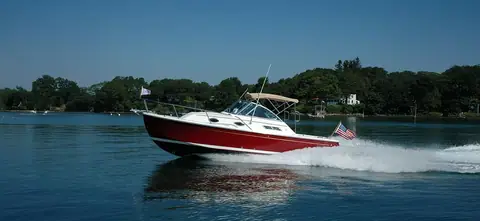
Back Cove 26
Downeast Yachts, 27 ft
Used $55K to $95K
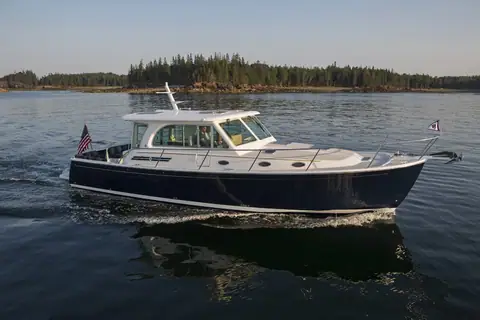
Sabre's younger sibling, built in Rockland, Maine for couples who want Downeast looks without Downeast prices.
Downeast Yachts, 27 ft
Used $55K to $95K
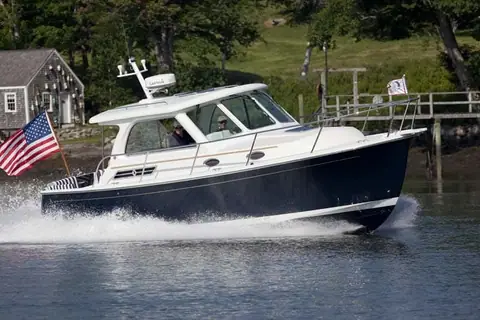
Downeast Yachts, 34 ft
Used $150K to $260K
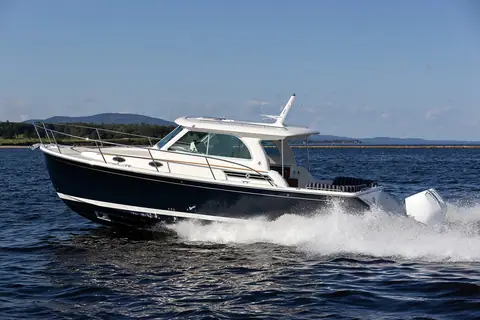
Downeast Yachts, 40 ft
Used $440K to $760K
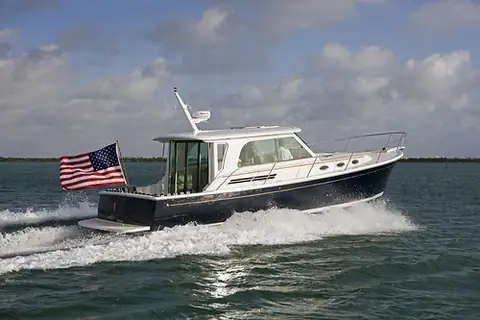
Downeast Yachts, 42 ft
Used $300K to $700K
Downeast Yachts, 46 ft
Used $450K to $980K
Back Cove builds Downeast-style express cruisers in Rockland, Maine. We cover five models, the small 26 and 30, the best-selling 37, the two-cabin 41 flagship and the outboard 34O, all backed by very strong resale.
Back Cove Yachts came about around 2003 because Sabre dealers saw a gap. Sabre's sedans and express boats were getting larger and more expensive, and customers kept asking for a smaller Downeast-style cruiser that was simple to run, efficient and recognizably from Maine. The answer was the Back Cove 29, a single-diesel express with a lobster-boat sheer, which established the formula the brand still follows.
Back Cove shares a 240,000 square foot facility in Rockland with Sabre, and together they form the largest recreational boatbuilder in Maine. The company says it has built more than 1,000 yachts, now cruising from Norway and Greece to Japan and New Zealand. Construction uses production-line methods and vacuum infusion rather than the slower, more custom approach of builders like Hinckley.
The early lineup was small and simple. The Back Cove 26 joined the 29 in 2004 as the smallest model the company has built, a spoon-bowed weekender with one four-cylinder diesel, a bow thruster, a V-berth and an enclosed head, offered in open bass boat and hardtop versions. A 33 followed in 2006. The 29 ended in 2009 after 205 hulls, and its place went to the Back Cove 30 in 2010, a little beamier, with a transom door and a single Yanmar. The 30 was rested in 2016 when the 32 arrived, so both small boats are now used-market buys.
The Back Cove 37, launched in 2009, became the model most people picture when they hear the name. More than 200 were built before its molds were retired in 2020, and it was succeeded by the 372 in 2021. The Back Cove 41 took the formula to its largest size in 2014, adding a second en suite stateroom while keeping a single 600 hp Cummins as standard. It became a Great Loop favorite, and after roughly 106 hulls it was updated and reintroduced as the 412 in 2025.
Every inboard Back Cove we cover uses a single diesel, with thrusters and a keel or skeg protecting the running gear. That keeps fuel burn, maintenance and purchase price down and gives the boats an easy, predictable feel. Cruising speeds in the high teens to low 20s suit the Maine coast, the Chesapeake and the Intracoastal Waterway, where most owners use them, and the 41 can loaf along at trawler speed on very little fuel.
The outboard-powered O series changed the conversation. The Back Cove 34O, the company's first outboard boat, debuted at Newport in 2018 and now runs twin Mercurys to around 40 knots on a hull that draws about 2 feet. It offers easier engine service and a larger cockpit, appealing to buyers coming from center consoles, and was later joined by the 39O.
Back Coves hold their value as well as almost any production powerboat in the US. Downeast styling ages slowly, the single-engine layout keeps running costs predictable and the buyer pool runs from retirees to young families. A Back Cove 26 or 30 is the affordable way in, a 37 is the most liquid on the brokerage market, and late-model 41s and 34Os sit at the top of the used price ladder. Expect less negotiation room than on comparably sized Italian or mass-market express cruisers. Service is easy along the East Coast through the Sabre and Back Cove dealer network.
When you inspect a used boat, focus on the systems that work hardest.
Back Cove yachts are built in Rockland, Maine, in the same facility as Sabre Yachts.
Yes. Back Cove was created as a sister brand of Sabre, and the two share a plant and leadership.
Inboard Back Coves use a single diesel with thrusters, while the O series such as the 34O uses twin outboards.
The 41 is the classic Loop choice thanks to its two staterooms and frugal single diesel. The 37 suits couples who want a smaller, cheaper boat.
The Back Cove 26, introduced in 2004, is the smallest model the company has built.
Yes. They are among the strongest-holding production powerboats in the US because of their styling and economical layout.
Official website: backcoveyachts.com. Yatch US is independent and not affiliated with Back Cove Yachts.