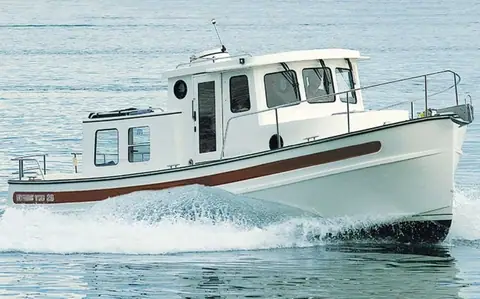
Nordic Tug 26
Trawlers & Explorer Yachts, 29 ft
Used $30K to $220K
A Skagit Valley builder that turned a fuel-crisis hunch into a whole category of tug-styled cruisers, still built in Washington State.
Trawlers & Explorer Yachts, 29 ft
Used $30K to $220K
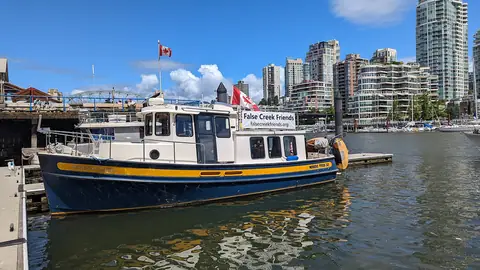
Trawlers & Explorer Yachts, 32 ft
Used $70K to $230K
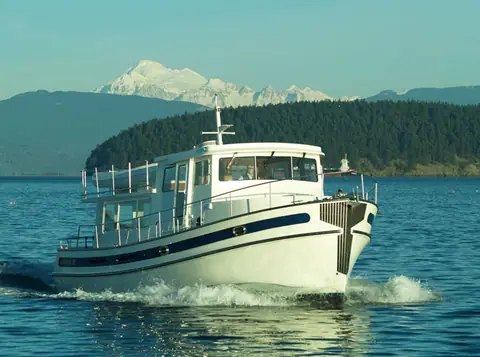
Trawlers & Explorer Yachts, 45 ft
Used $230K to $650K
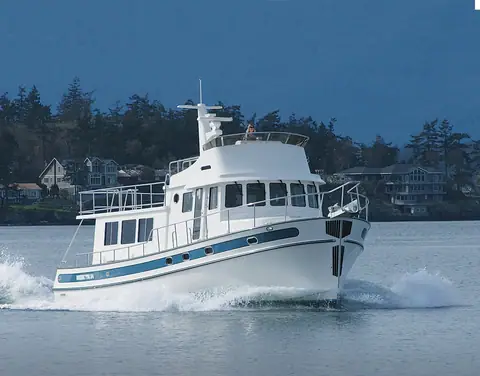
Trawlers & Explorer Yachts, 57 ft
Used $800K to $1.8M
Nordic Tugs, founded in 1979 by the Husted brothers and Gail Davis, kicked off the American pleasure tug trend at the 1980 Seattle show. It builds single-engine, tug-styled cruisers from 26 to 54 feet in Burlington, Washington.
The Nordic story starts in the sailboat business. Jerry Husted owned Blue Water Boats near Seattle in the 1970s, building Ingrid ketches, and the fuel shortages of that decade convinced him that fast, thirsty powerboats were in trouble. Kicking ideas around with naval architect Lynn Senour, he hit on a simple point of style: a tug never looks out of place at low speed, so an owner would be happy to cruise one gently. Husted, his brother Jim and Gail Davis incorporated Nordic Tugs in 1979.
Their first boat, a 26-footer priced just under $30,000, stole the 1980 Seattle International Boat Show, and the company says 37 orders were written there. Within a year Sundowner and Lord Nelson had tugs of their own on display, and the pleasure tug had become a genre.
Senour's formula became the brand's DNA: a hard-chined, semi-planing bottom with a full keel guarding the prop and rudder, topped by a 1930s-style deckhouse with tall windows and a smokestack. Nordic kept developing variations of that basic hull for almost thirty years, and nearly every model since has relied on a single diesel, trading twin-engine redundancy for simplicity and fuel savings, while many models can still run well above displacement speed.
Production moved north to Burlington in the Skagit Valley in 1990. The plant grew in 1998 and again in 2007, reaching about 80,000 square feet in two buildings by 2014, and in 2007 the whole range gained NMMA and CE certification.
The lineup expanded in steps. The original 26 ran until 1997 and came back in 2009 in small numbers. The 32, introduced in 1985, was the company's bread and butter for twenty years and later evolved into the 34. A 42 arrived in the late 1990s and gave way to the 44 in 2016, and a 52 introduced in 2003 grew into the 54 flagship around 2008. Today's catalog lists the NT26, NT34, NT40, NT44, NT50 and NT54.
We review four of these boats individually, the Nordic Tug 26, 32, 42 and 54. Each model page covers production history, engines, layouts, performance and prices, so this page sticks to the company.
Nordic Tugs sell through a dealer network listed on the factory website, and the Burlington plant remains a source of help for owners of older hulls. Resale is a strong point. In the Northwest, where owners cruise the San Juans, the Gulf Islands and the Inside Passage, demand is steady and many boats change hands within the owner community.
General checks on any used Nordic Tug:
At the company's plant in Burlington, Washington, its home since 1990.
Naval architect Lynn Senour developed the original hull from co-founder Jerry Husted's idea of a slow, efficient tug-style cruiser.
Generally yes, thanks to steady Northwest demand and a loyal owner base.
It is widely credited with it. Its 26 debuted in 1980, a year before rival builders showed their own tug-styled boats.
Official website: nordictugs.com. Yatch US is independent and not affiliated with Nordic Tugs.